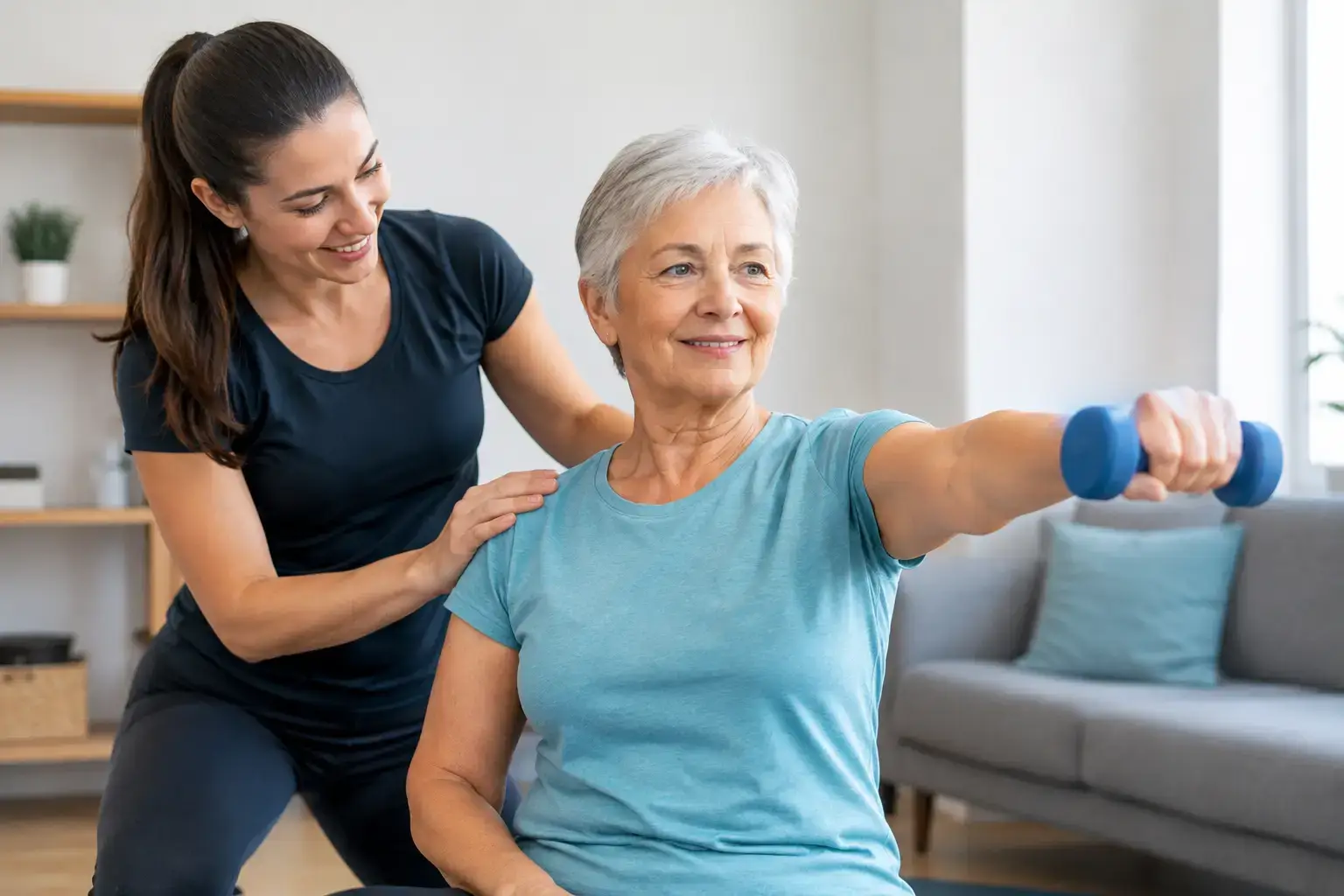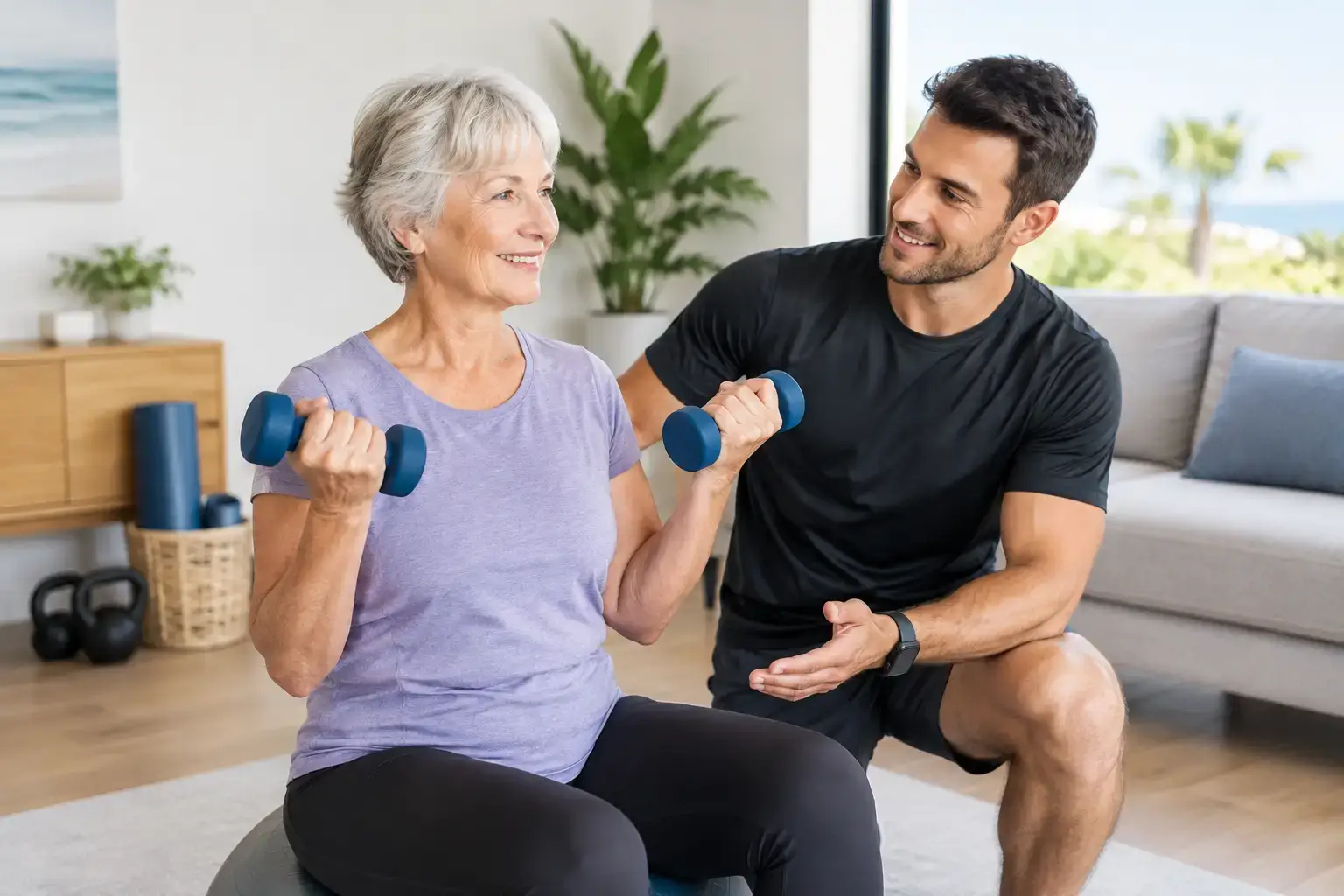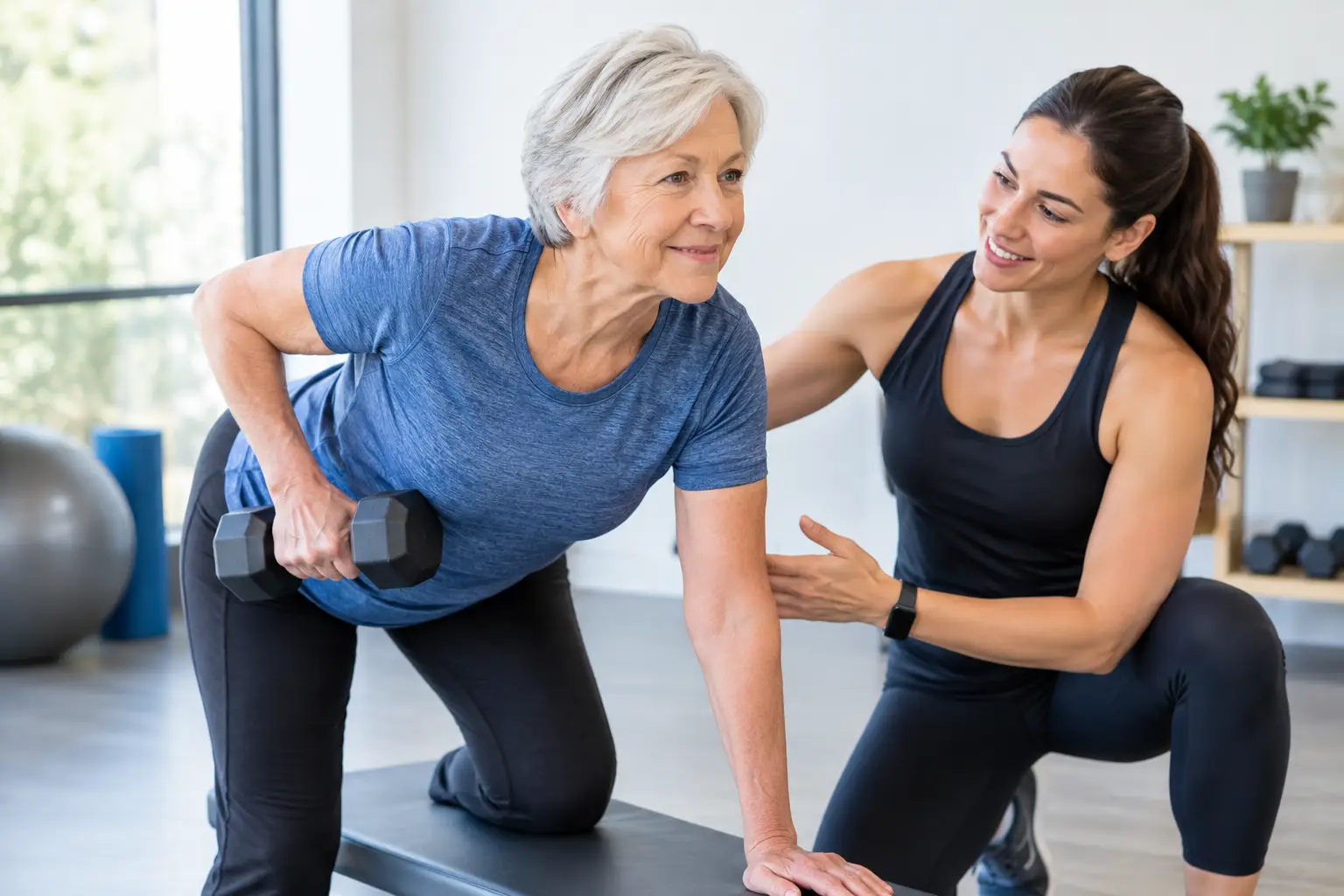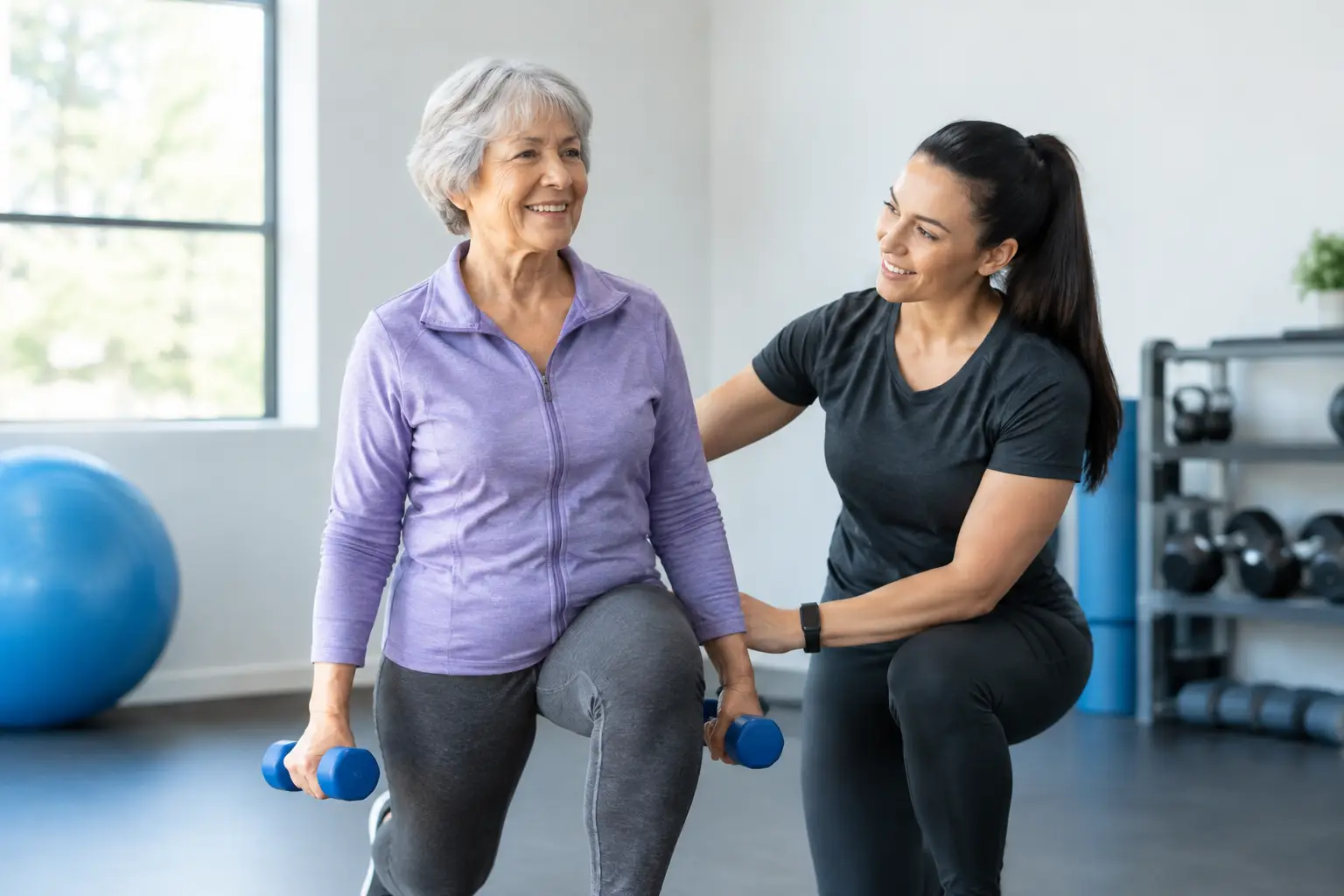

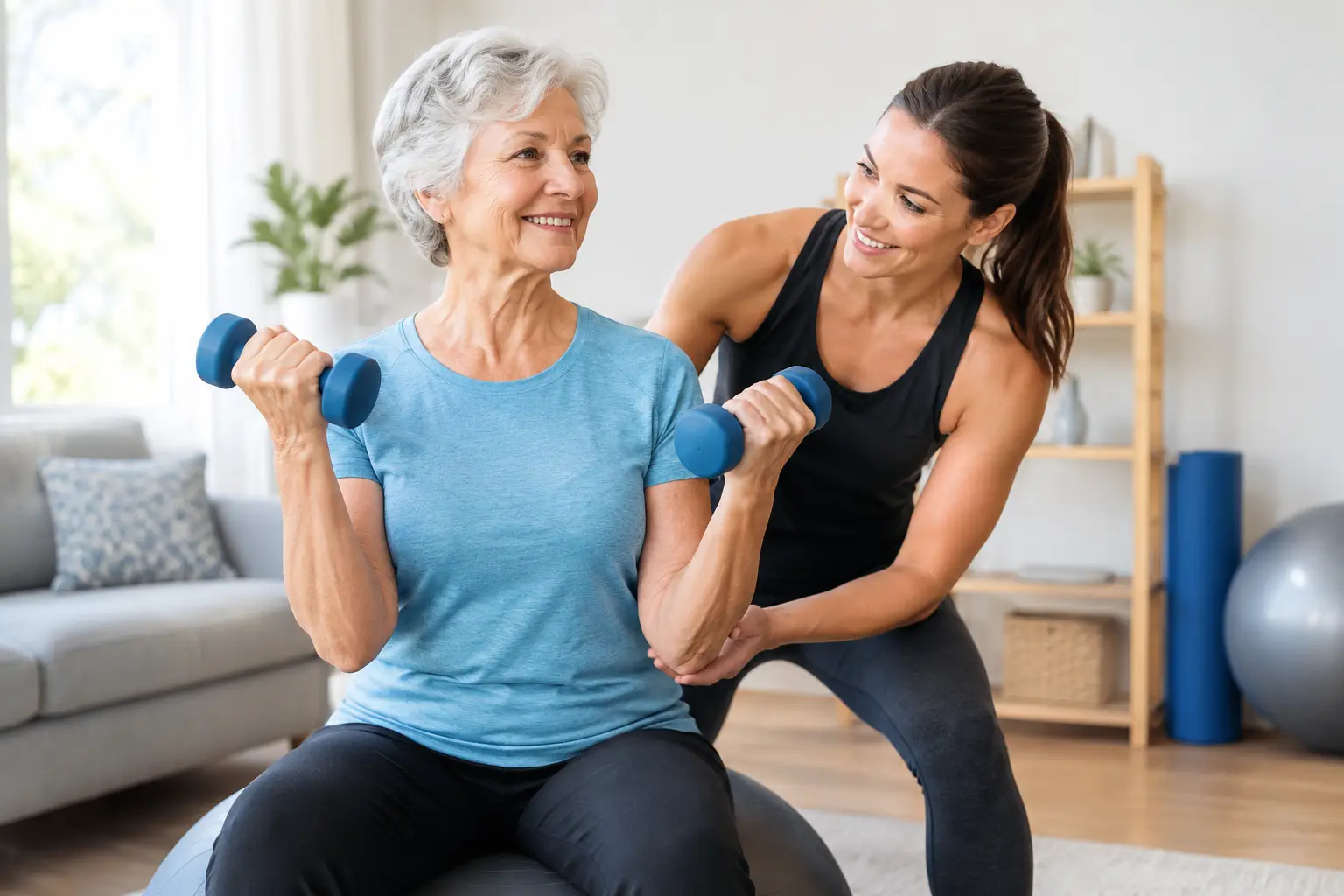
A walk along the coast, a pickleball game with friends, carrying groceries up the steps, getting down to play with grandchildren – these are the moments that make strength and mobility matter. Senior fitness Del Mar should support the life you want to live, not leave you sore, intimidated, or worried about making an old injury worse.
For adults 55 and older, the right exercise program is rarely about pushing harder. It is about moving better. A personalized, in-home approach can help you build usable strength, improve balance, ease stiffness, and regain confidence while respecting your joints, medical history, and current ability.
Why generic workouts often miss the mark
Most exercise advice assumes everyone starts from the same place. But a person managing knee arthritis has different needs than someone rebuilding strength after a hip replacement. A former runner with back stiffness needs a different plan than an active retiree who wants to feel steadier on uneven paths or improve their pickleball footwork.
A crowded gym can make those differences harder to address. Machines may not fit your body comfortably, classes move at someone else’s pace, and it can be difficult to know whether a movement is helping or aggravating pain. Some people also avoid exercise altogether because getting to the gym, finding parking, and navigating an unfamiliar environment feels like one more obstacle.
Effective senior fitness begins with an honest look at how your body moves now. That includes your posture, range of motion, balance, strength, previous injuries, surgical history, daily routines, and goals. From there, exercise becomes practical rather than generic.
What a smart senior fitness program includes
A safe program should improve the movements you use every day. Rather than chasing exhausting workouts or complicated routines, the focus is on steady progress in the areas that protect independence.
Strength for real life
Strength training is one of the most valuable tools available as we age. It helps preserve muscle mass, supports bone health, and makes daily activities less demanding. But strength work does not have to mean heavy barbells or painful repetitions.
A well-designed plan may use resistance bands, dumbbells, bodyweight exercises, a stability chair, or other portable equipment. The right level of resistance depends on your form, joint tolerance, and health history. For one client, a controlled sit-to-stand from a chair may be the best starting point. For another, it may be progressive leg, back, and core training to improve hiking, golf, or travel stamina.
The goal is not to prove what you can tolerate in a single session. It is to build enough strength that stairs, household tasks, and favorite activities feel more manageable over time.
Balance that builds confidence
Falls are not an inevitable part of aging, yet balance is often ignored until someone has a frightening close call. Balance training should be specific, gradual, and supervised. It can include foot and ankle strength, posture work, weight shifting, controlled single-leg exercises, and practice stepping in multiple directions.
Balance also depends on leg strength, hip mobility, vision, medication effects, footwear, and the surfaces you walk on. That is why a one-size-fits-all “balance routine” has limits. The safest plan identifies what is contributing to instability and works within appropriate boundaries.
For many people, the biggest change is not just physical. It is the confidence to walk outside, navigate curbs, move through a busy room, or get up at night without feeling fearful.
Mobility without forcing painful stretches
Stiffness can make you feel older than you are. Tight hips may change your gait. Limited shoulder movement can turn reaching into a cabinet into a painful task. A stiff upper back can affect posture, breathing, and balance.
Mobility training should not involve forcing a joint through sharp pain. Gentle active range-of-motion work, targeted stretching, myofascial trigger-point and fascia-release techniques, and active PNF stretching can help improve how the body moves. The best method depends on the source of the restriction. Sometimes the issue is joint stiffness; sometimes it is muscle guarding, weakness, poor movement habits, or a combination.
This is where thoughtful coaching matters. Feeling a stretch is not always the same as making progress, and more intensity is not always better.
Senior fitness in Del Mar should fit your health history
If you are returning to activity after physical therapy, there is often a frustrating gap. You may have been cleared to exercise, but still feel unsure about what to do next. You do not want to lose the gains you made in therapy, yet a standard personal training plan may seem too aggressive or disconnected from your recovery.
Therapeutic exercise can help bridge that gap. It takes the principles you learned during rehabilitation and applies them to functional strength, mobility, and everyday movement. This is especially helpful after knee, hip, shoulder, or back concerns, when good form and thoughtful progressions matter more than fast results.
That does not mean every ache requires stopping. Mild muscle fatigue can be a normal part of getting stronger. Sharp pain, swelling, numbness, instability, or symptoms that worsen after exercise deserve attention and may require communication with your physician or physical therapist. A qualified trainer can modify your plan, but should never promise to diagnose or treat a medical condition.
The practical advantage of training at home
Your home is where your movement challenges actually happen. You stand from your own chairs, use your own stairs, reach into your own cabinets, and walk across your own floors. In-home personal training makes it easier to practice these skills in the environment where they count.
It also removes common barriers. There is no commute, no gym contract, no waiting for equipment, and no pressure to keep pace with strangers. Your trainer brings the equipment needed for a focused session and adapts the workout to your space, whether that is a living room, patio, or home gym.
For couples, shared household training can be a particularly practical option. Partners can exercise together while following individual modifications and goals. One person may be working on balance after a knee procedure while the other wants more strength and energy. Both can benefit without needing identical workouts.
How progress should feel
Progress is not always a dramatic transformation. Often, it shows up in the moments that were quietly becoming difficult: rising from a low chair without using your hands, walking farther without back tightness, feeling more stable on the stairs, sleeping more comfortably, or returning to a favorite activity.
A good program tracks these meaningful changes alongside measurable improvements in strength, mobility, and balance. It also adjusts. If your shoulder is irritated, the plan changes. If you are ready for more challenge, resistance or complexity can increase gradually. If you have a busy week or poor sleep, the session can meet you where you are rather than treating consistency as all-or-nothing.
Nutrition, hydration, walking, recovery, and simple at-home movement habits can support your training results as well. You do not need perfection. You need a plan realistic enough to continue.
Start where you are, then build from there
You do not have to wait until pain, weakness, or fear of falling limits your life further. Whether your goal is to recover confidence after an injury, reduce stiffness, maintain bone-supporting strength, or simply keep up with the people and places you love, the first step can be calm and manageable.
Concierge Personal Training provides private, customized in-home coaching for adults 55 and older throughout Greater San Diego, including Del Mar. Call or text 858-284-8004 for a first FREE session.
Your body does not need to move like it did at 30 to carry you confidently through the years ahead. It needs thoughtful practice, the right support, and a plan built around the life you want to keep enjoying.