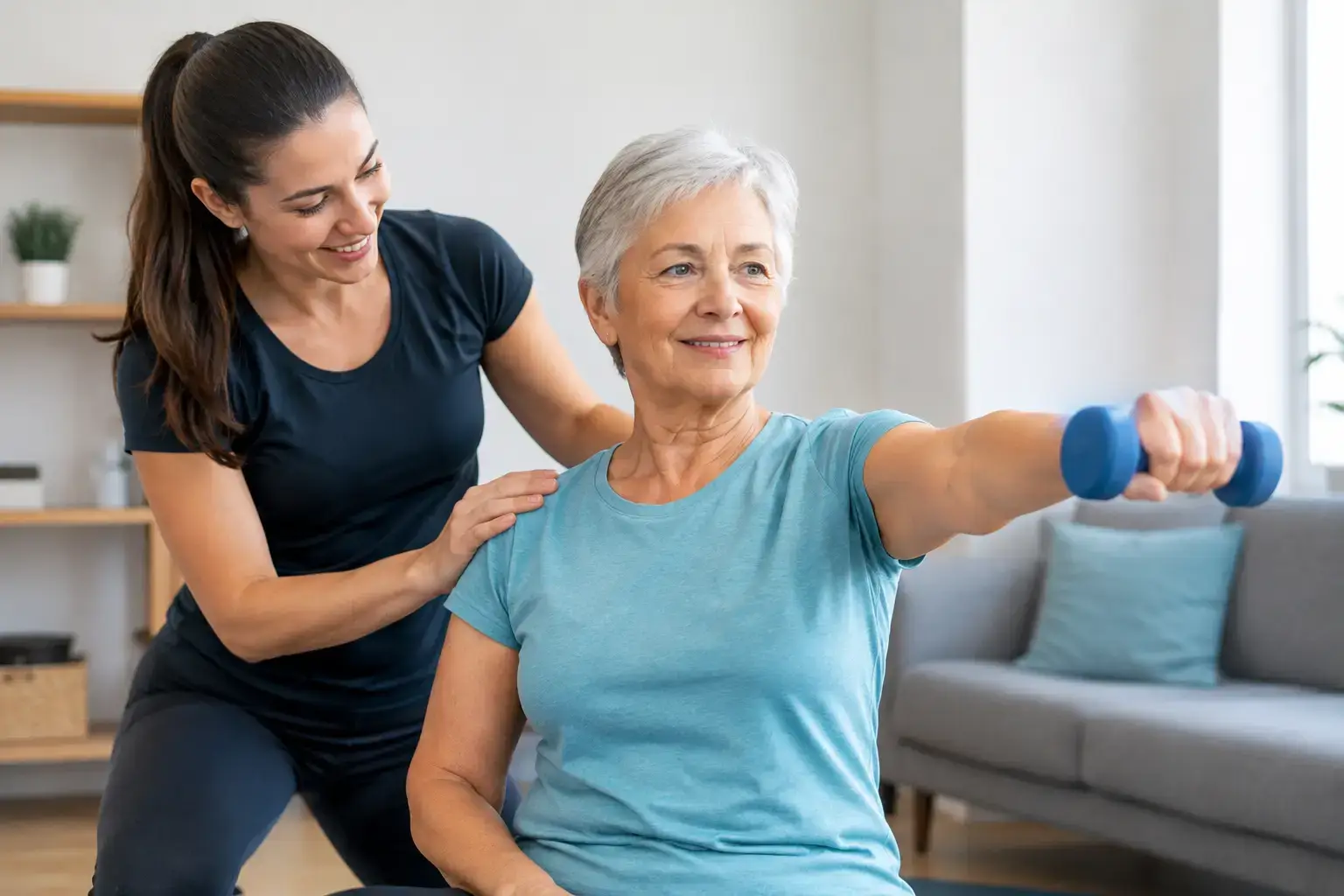

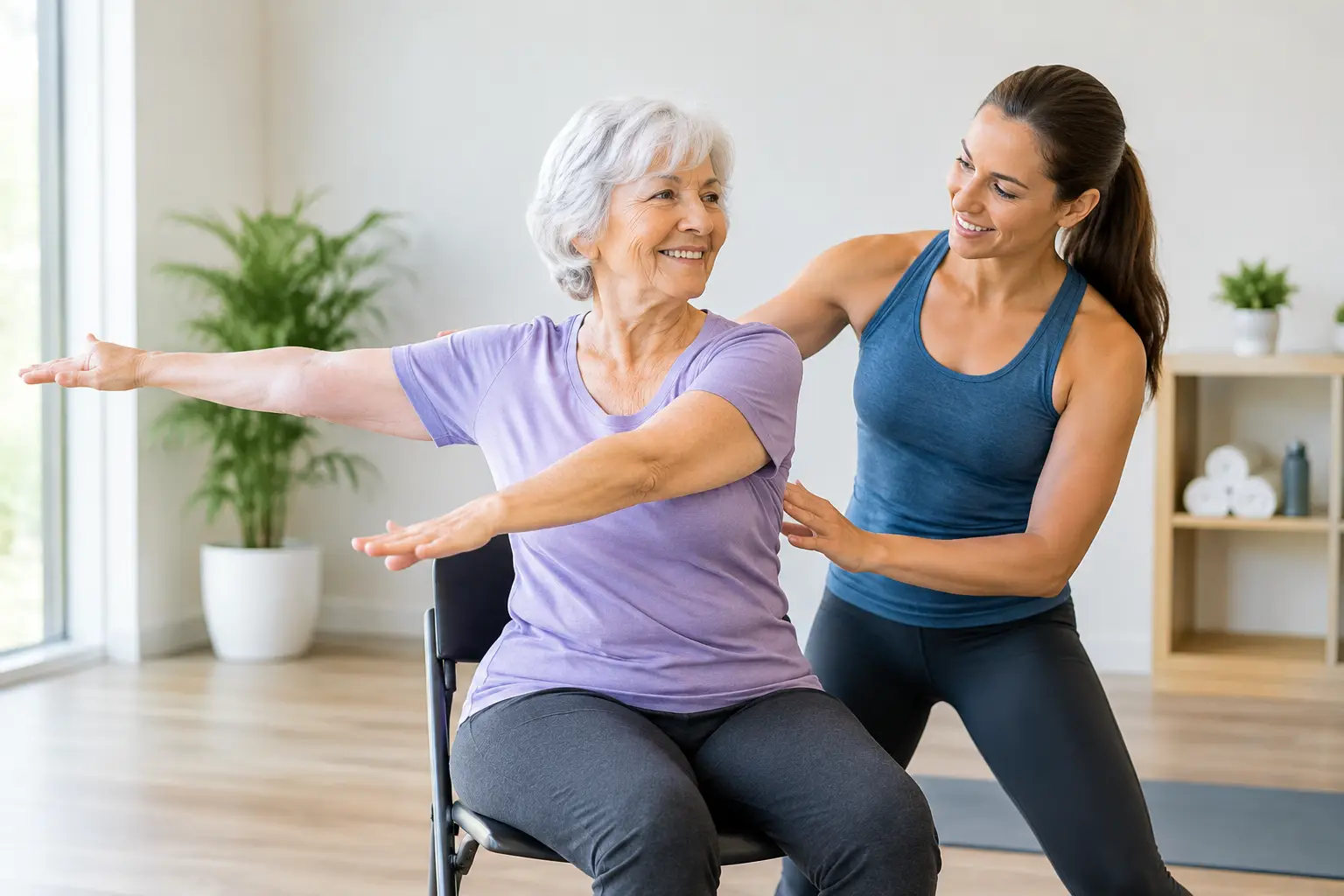
A stiff back should not decide whether you can reach the kitchen cabinet, enjoy a walk near the coast, or get down to the floor to play with grandchildren. Chair yoga for older adults offers a practical place to begin when standing exercise feels intimidating, joints are sore, or balance is not what it used to be. With a stable chair and thoughtful guidance, you can improve mobility, reconnect with your strength, and move with more confidence at home.
This is not about forcing your body into complicated yoga poses. It is about using controlled, comfortable movement to reduce the effects of too much sitting, improve body awareness, and support the activities that matter most to you.
Why Chair Yoga for Older Adults Works
Many adults over 55 stop moving because pain, fear of falling, or a previous injury has made exercise feel risky. Unfortunately, avoiding movement altogether can lead to more stiffness, weaker muscles, poorer balance, and less confidence. Chair yoga creates a lower-barrier way to stay active without asking you to get on the floor or keep up with a class.
A chair gives you a dependable base of support. That stability allows you to focus on posture, breathing, joint range of motion, and gentle strength rather than worrying about losing your balance. For someone recovering from a knee replacement, managing arthritis, or returning to activity after physical therapy, that support can make all the difference.
Regular practice may help you move more easily through daily tasks such as standing from a chair, turning to look behind you while driving, carrying groceries, and reaching overhead. It can also be a useful complement to strength and balance training. The key word is complement. Chair yoga can improve mobility and comfort, but it does not fully replace resistance training, walking, or individualized rehabilitation when those are appropriate for your goals.
What a Safe Session Should Include
The most effective chair yoga is not a random collection of stretches. It should address the areas that commonly become restricted with age: the neck, upper back, shoulders, hips, ankles, and chest. It should also include gentle muscle activation, especially through the legs and core, because flexibility without stability does not reliably improve function.
Start with a sturdy, armless chair placed on a level, non-slip surface. Avoid chairs with wheels, deep cushions, or a tendency to slide backward. Sit toward the front half of the seat with both feet on the floor, unless a movement calls for a supported adjustment. Wear comfortable clothing that does not restrict your knees or shoulders.
Breathing matters, too. A slow exhale can reduce the urge to tense your shoulders and grip through painful areas. You should feel a mild stretch or muscular effort, never sharp pain, pinching, numbness, dizziness, or pressure in the chest. Stop if any of those symptoms appear.
If you have osteoporosis, significant balance concerns, uncontrolled blood pressure, recent surgery, vertigo, or a history of spinal fractures, your movements may need specific modifications. Forward bending, twisting, and overhead positions are not automatically unsafe, but the right amount depends on your medical history, current symptoms, and technique. This is where individualized instruction is far safer than copying an online routine.
A Gentle Chair Yoga Routine to Try at Home
Move slowly through the following sequence once or twice, taking a few easy breaths between exercises. Keep the effort light at first. A 10-minute practice done consistently is more valuable than an ambitious session that leaves you sore or discouraged.
Settle Your Posture and Breathing
Sit tall without rigidly pulling your shoulders back. Place your hands on your thighs and let your feet press gently into the floor. Inhale through your nose if comfortable, then exhale slowly through pursed lips. Repeat for five breaths.
As you breathe, notice whether one hip is bearing more weight than the other or whether your shoulders are creeping toward your ears. Simply recognizing these habits can help you reset your posture throughout the day.
Loosen the Neck and Shoulders
Turn your head gently to the right, return to center, then turn to the left. Keep your chin level rather than tipping it up. Repeat several times, staying in a comfortable range.
Next, slowly lift your shoulders toward your ears and lower them down. Follow with shoulder rolls backward. These movements can feel especially helpful after reading, driving, or spending time at a computer, but avoid large circles if they aggravate a shoulder injury.
Open the Chest and Upper Back
Rest your hands behind your head only if your shoulders allow it, or place them lightly on your collarbones. Gently draw your elbows outward as you lift through your chest. Do not force your lower back into an arch. Hold for one or two calm breaths, then relax.
Then reach both arms forward at shoulder height, or as high as is comfortable, and gently round your upper back as if you are hugging a large beach ball. This pair of movements counters the rounded posture that often develops after years of sitting and can make breathing feel less restricted.
Improve Hip and Knee Mobility
While seated tall, slowly lift one knee a few inches, lower it with control, then switch sides. This seated marching movement wakes up the hip flexors and core while giving you a chance to work on even weight through both sides of your body.
For a gentle hamstring stretch, straighten one leg with the heel resting on the floor and toes pointing upward. Hinge slightly forward from your hips with a long spine. You do not need to reach for your toes. A modest stretch behind the thigh is enough. Return to upright and repeat on the other side.
Build Ankle Strength for Better Balance
Keep both feet on the floor and lift your heels, pressing the balls of your feet down. Lower slowly. Then lift your toes while keeping your heels grounded. Repeat each movement eight to 12 times.
Your ankles play a major role in balance reactions. Improving their strength and mobility can support steadier walking, easier stair climbing, and more confidence on uneven surfaces. If you experience cramping, reduce the range and slow down.
Add a Supported Seated Twist
Place your right hand on the outside of your left thigh and your left hand beside you on the chair. Rotate gently through your rib cage to the left while keeping your hips facing forward. Do not pull yourself deeper into the twist. Take two breaths, return to center, and switch sides.
A controlled rotation can make everyday movements feel easier, including reaching for a seat belt or turning in the kitchen. If you have osteoporosis, back pain, or a recent spinal procedure, a smaller rotation is often the smarter choice.
Finish With a Sit-to-Stand Practice
This movement is not traditional chair yoga, but it is one of the most valuable functional exercises for older adults. Scoot toward the edge of the chair, place your feet under your knees, and lean forward slightly from the hips. Press through your feet to stand, using your hands on the chair arms or a nearby stable surface if needed. Slowly sit back down.
Try five repetitions with control. The ability to rise from a chair is closely tied to independence, leg strength, and fall prevention. If it causes knee pain, the chair may be too low, your feet may need repositioning, or you may benefit from hands-on coaching.
Make Progress Without Pushing Through Pain
Chair yoga should leave you feeling more open and energized, not depleted. For many people, two or three short sessions each week is a realistic starting point. On stiff days, focus on breathing, shoulder motion, ankle pumps, and easy seated marching. On better days, add more repetitions, longer holds, or a few supported standing exercises.
Progress is not always measured by touching your toes. It may look like getting out of bed with less stiffness, walking farther at the farmers market, feeling steadier while carrying laundry, or returning to pickleball with better hip mobility. Those are meaningful wins because they protect your independence.
A personalized plan is especially valuable when one side of the body is weaker, a replacement joint changes your movement patterns, or pain keeps returning despite your best efforts. At Concierge Personal Training, in-home sessions can combine chair yoga with therapeutic exercise, balance work, active stretching, and strength conditioning based on what your body needs now.
You do not have to wait until stiffness becomes a bigger limitation. Call or text 858-284-8004 for a first FREE session. The right first step is not the hardest exercise – it is the one that helps you trust your body enough to keep moving tomorrow.