
A moment of unsteadiness can change how you move through the day. You may start reaching for furniture, avoiding uneven sidewalks, turning down a beach walk, or feeling nervous when your hands are full on the stairs. Balance training for fall prevention is not about performing impressive poses. It is about helping your body respond quickly and confidently when life throws you off center.
For adults over 55, falls are rarely caused by one thing alone. They often develop from a combination of weaker leg muscles, stiff ankles or hips, medication changes, reduced vision, old injuries, pain, and less practice moving in different directions. The good news is that many of these factors can be improved with the right kind of training.
Why Falls Become More Likely With Age
Balance is an active skill. Your brain, eyes, inner ear, feet, joints, and muscles continually exchange information to keep you upright. When you step off a curb, turn to answer the door, or catch yourself after the dog pulls slightly on the leash, your body has only seconds to react.
Strength matters because your legs and hips must produce enough force to correct a wobble. Mobility matters because stiff ankles, hips, and spine can limit your ability to shift weight where it needs to go. Coordination matters because everyday life is not performed standing perfectly still with both feet planted.
Pain can complicate the picture. Someone with arthritis may shorten their stride to avoid discomfort. A person recovering from a knee or hip procedure may unconsciously favor one side. Over time, those compensations can make walking and turning less stable. This is why a generic gym balance class is not always the best answer. The exercises need to respect what your body can do now while steadily building what it needs next.
What Balance Training for Fall Prevention Should Include
A safe, effective program trains more than standing on one foot. That exercise can be useful, but it is only one piece of the puzzle. The best plan blends strength, mobility, posture, reaction training, and practical movement patterns that carry over to daily life.
Stronger legs and hips
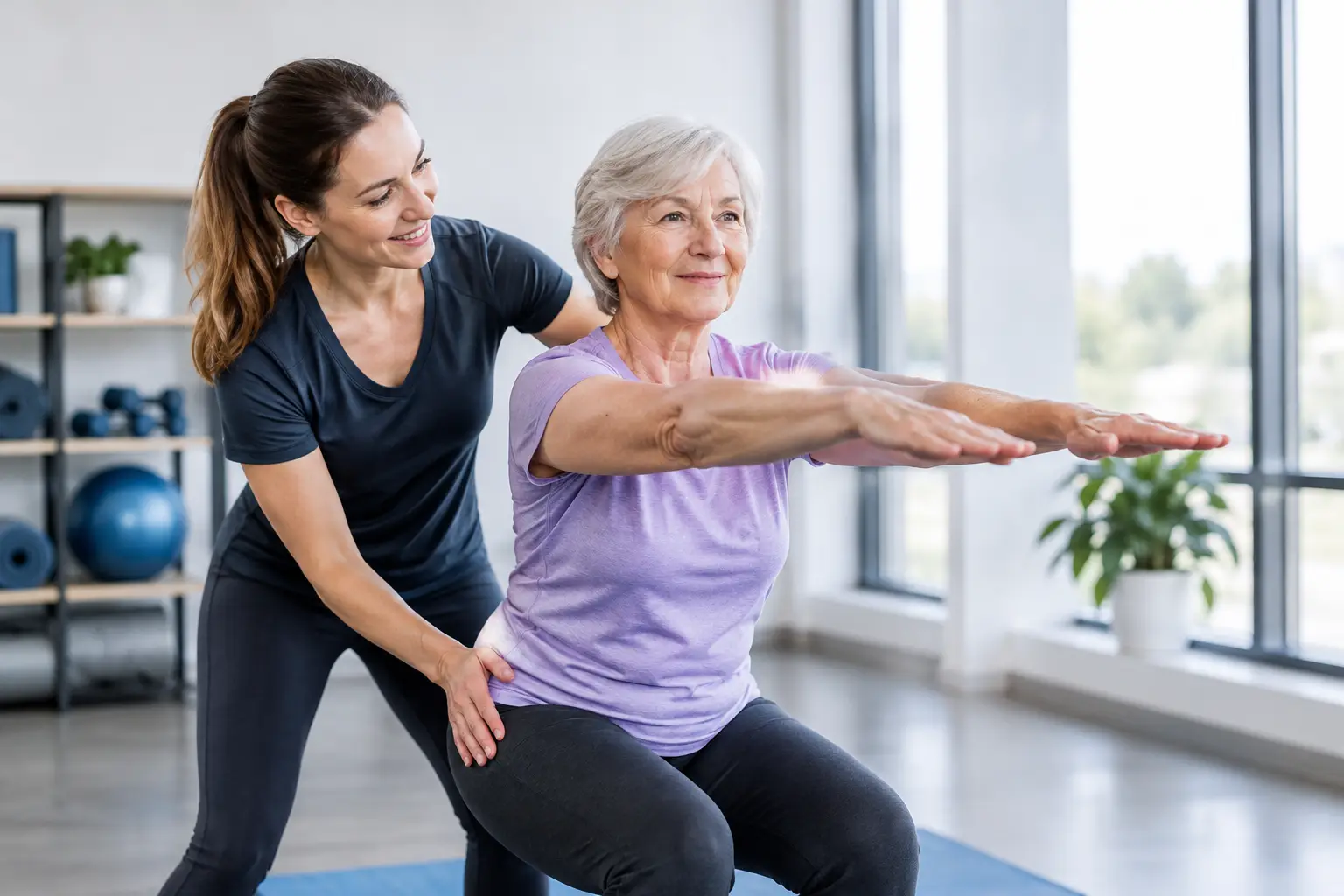
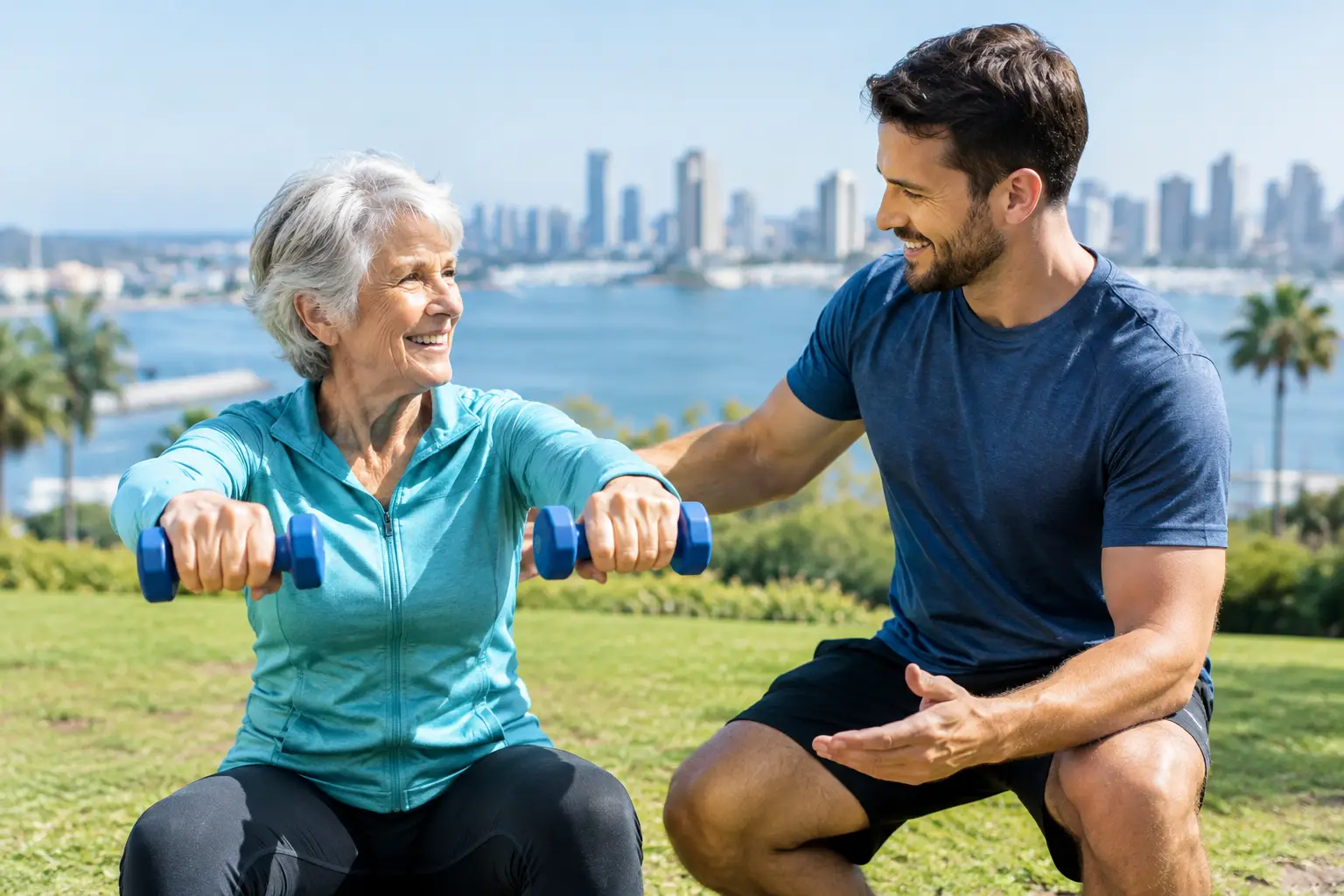
Your hips, thighs, calves, and core act as your recovery system when you lose balance. Sit-to-stands, supported squats, step-ups, heel raises, and carefully progressed resistance exercises can make a meaningful difference in how confidently you climb stairs, get out of a chair, or walk uphill.
For someone with osteoporosis, knee discomfort, or a history of joint replacement, the exercise selection and range of motion matter. The goal is not to push through pain. It is to build usable strength with clean movement and appropriate support.
Better ankle and hip mobility
Many stumbles happen because the foot cannot adapt quickly to the ground. Stiff ankles can make it harder to clear a toe over a threshold or stabilize after stepping on an uneven surface. Limited hip mobility can make turning, stepping sideways, and getting in and out of a car more difficult.
Targeted mobility work, active stretching, and hands-on fascia-release techniques can help restore movement without forcing a joint. When paired with strength training, improved mobility becomes more than flexibility. It becomes control.
Practice with real-life movement
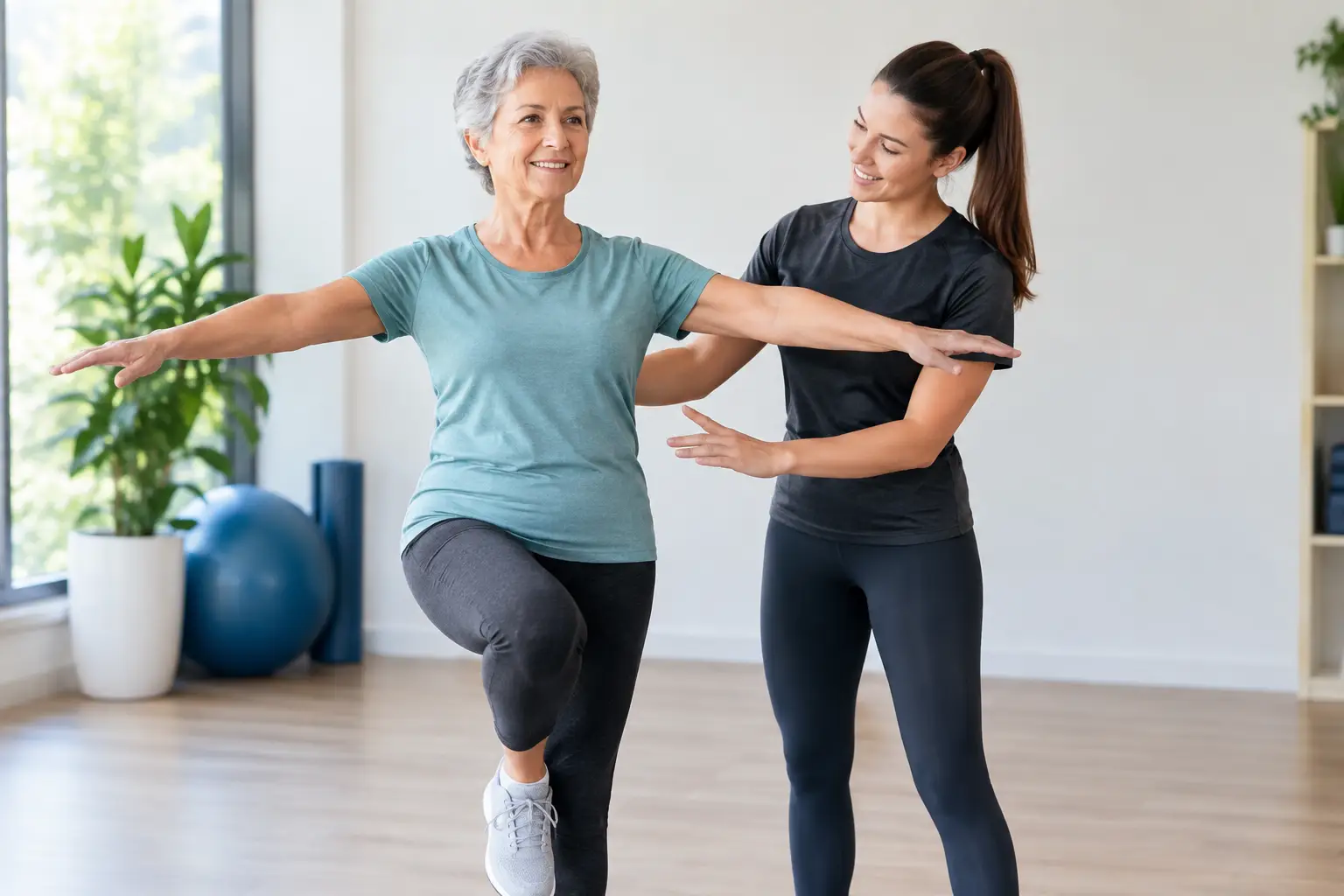
Life requires you to reach, turn, carry, look around, and change direction. A thoughtful balance program includes controlled versions of those tasks: stepping forward, backward, and sideways; turning around a marker; reaching from different positions; and walking while responding to simple cues.
This type of practice is especially valuable for active adults who play pickleball, golf, garden, travel, or enjoy long walks in San Diego. It helps the body learn to manage movement without becoming rigid or fearful.
Appropriate challenge and support
Balance improves when the task is challenging enough to require focus but safe enough to repeat well. Holding a countertop, using a stable chair, or having a trainer nearby is not “cheating.” It allows you to practice with confidence while reducing unnecessary risk.
As ability improves, the challenge may progress by narrowing your stance, changing surfaces, reducing hand support, adding light movement, or introducing simple reaction tasks. Progress should be earned, not rushed.
A Simple Starting Point at Home
If your physician or physical therapist has not given you restrictions, begin with a clear, uncluttered area and stable shoes. Keep a kitchen counter or sturdy chair within reach. Avoid balance exercises when you feel dizzy, unusually fatigued, or unwell.
Start with weight shifts: stand tall with both hands lightly touching the counter, then slowly shift your weight from one foot to the other. Notice the pressure move across each foot without lifting either foot from the floor. Continue for one to two minutes at an easy pace.
Next, practice supported sit-to-stands from a firm chair. Keep your feet under your knees, stand up smoothly, then sit down with control. This builds the leg strength needed for one of the most common daily movements. If your knees hurt, the chair may be too low or your form may need adjustment.
Then try a supported heel raise. Hold the counter, lift both heels slowly, pause briefly, and lower with control. Strong calves and ankles help with push-off during walking and with quick corrections when your balance shifts.
Finally, practice a small step-and-hold. Step forward with one foot, pause for two or three seconds, then return to the start. Repeat on both sides. Keep the steps short at first. Quality matters more than distance or speed.
These movements may sound simple, and that is the point. Consistent practice of foundational movements can create real change. Still, home exercises are not a substitute for individualized guidance if you have had recent falls, significant pain, numbness, dizziness, or a recent orthopedic procedure.
When You Need More Than a General Exercise Routine
A personalized assessment can reveal why balance feels unreliable. One person may need stronger hips. Another may need ankle mobility after years of stiffness. Someone else may have adequate strength but poor confidence after a previous fall. The right plan looks different for each situation.
This is particularly important after physical therapy ends. You may be cleared to exercise but still unsure how to return to stairs, longer walks, golf, pickleball, or regular strength training without aggravating an old injury. A skilled in-home trainer can bridge that gap by progressing therapeutic exercise into practical, whole-body conditioning.
At Concierge Personal Training, sessions are built around your home, your goals, and your current ability. We bring the equipment and provide one-on-one guidance, so you can train without the travel, crowded gym environment, or uncertainty of trying to figure it out alone. For couples, shared training can also be a motivating way to stay accountable together.
Signs It Is Time to Address Your Balance
Do not wait for a serious fall to make balance a priority. Pay attention if you find yourself grabbing walls or furniture, avoiding stairs, shuffling your feet, struggling to rise from low chairs, or feeling less steady when turning quickly. A growing fear of falling also deserves attention, even if you have not yet fallen.
Some warning signs require medical evaluation before beginning a new exercise program. Speak with your healthcare provider promptly if you have new dizziness, fainting, chest pain, sudden weakness, unexplained numbness, major changes in vision, or repeated falls. Exercise can be powerful, but it works best alongside appropriate medical care.
The goal is not to eliminate every risk from life. Uneven pavement, pets underfoot, poor lighting, and rushed moments can affect anyone. The goal is to give your body more strength, more options, and a faster response when those moments happen.
You deserve to move through your home and community with less hesitation and more trust in your body. Small, consistent training sessions can help you reclaim your strength, protect your independence, and keep saying yes to the activities that make life feel like yours. Call or text 858-284-8004 for a first FREE session.