

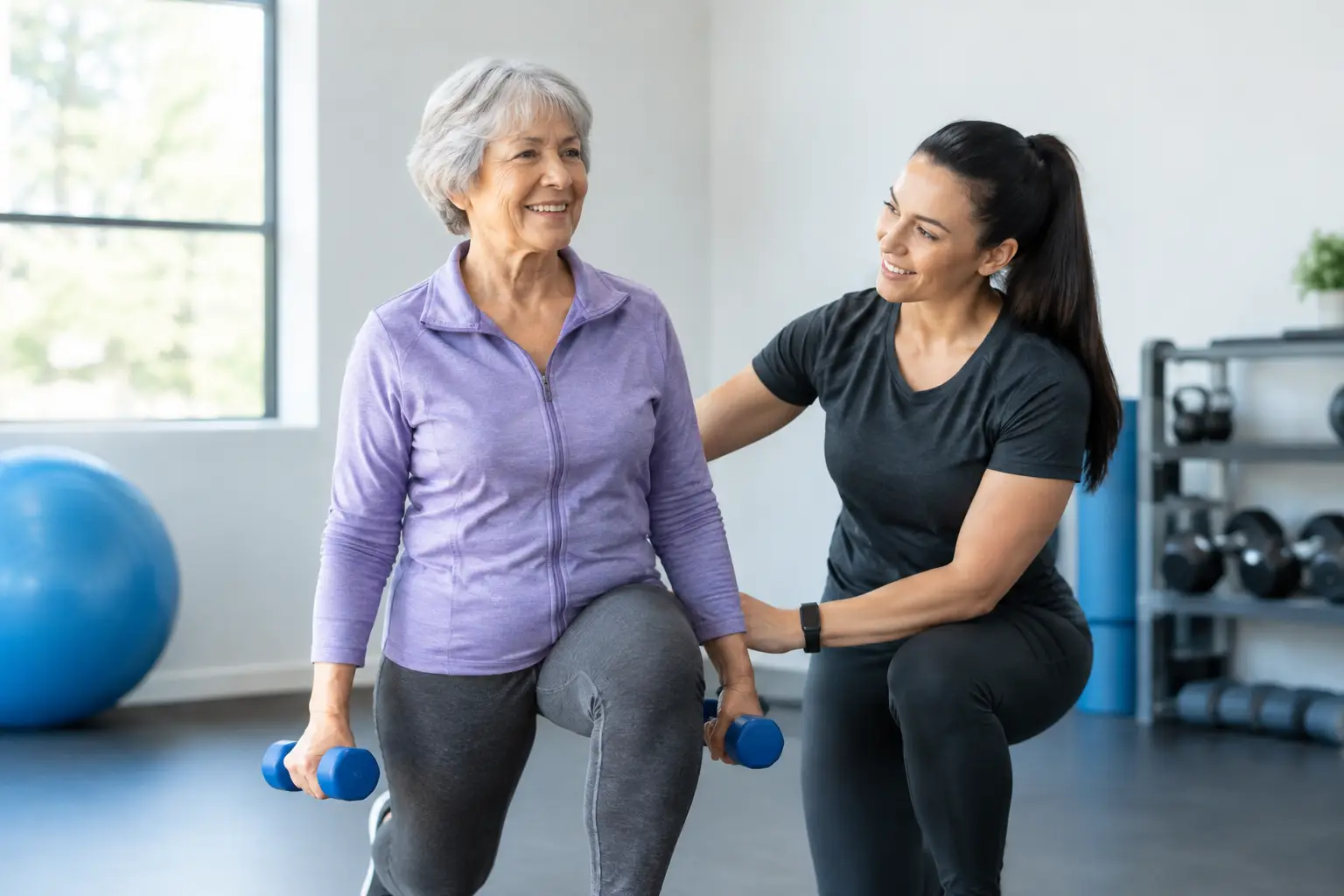
Getting out of a chair without bracing yourself, walking through the grocery store without fatigue, and trusting your leg on a curb are meaningful recovery milestones. A personal trainer after hip replacement can help you progress toward them, but only when the timing, exercise selection, and supervision are right. The goal is not to rush recovery. It is to reclaim strength, balance, and confidence without irritating a healing joint.
Hip replacement surgery can be life-changing for adults who have spent years managing arthritis pain, limited mobility, or disrupted sleep. Yet surgery is only one part of the process. After formal physical therapy ends, many people are told to keep moving but are unsure what that means. Too little activity can leave the hip weak and stiff. Too much, too soon, can create soreness, compensation patterns, or unnecessary setbacks.
When Can You Work With a Personal Trainer After Hip Replacement?
Your surgeon and physical therapist should guide the timeline. There is no single calendar date that applies to everyone. Recovery can be influenced by the surgical approach, the condition of your muscles before surgery, your balance, other joint issues, and whether complications occurred.
In many cases, a trainer becomes most useful after you have completed or are nearing the end of physical therapy and have been cleared for progressive exercise. That might be several weeks after surgery for some people and several months for others. The clearance matters more than the date.
A qualified trainer should never replace your medical team. Instead, they should build on the work your surgeon and physical therapist have already started. Ask your therapist what movements, ranges of motion, loads, and activities are appropriate now. A good trainer will welcome those guidelines and adjust your program as your recovery changes.
Early on, the focus may be simple: walking comfortably, standing evenly, improving hip control, and restoring the ability to manage stairs or get in and out of the car. Later, training can prepare you for longer walks, travel, gardening, golf, pickleball, or playing on the floor with grandchildren.
What a Personal Trainer After Hip Replacement Should Address
A hip replacement affects more than the hip itself. Many people protect the surgical side for months, shifting their weight into the other leg, tightening the low back, or relying heavily on a cane or countertop. Those habits can persist even after pain improves. Personalized training looks at how your whole body moves, not just whether you can complete a specific hip exercise.
Strength without forcing the joint
The glutes, quadriceps, hamstrings, calves, and core all help stabilize you during walking, stairs, and transfers. A program may begin with supported sit-to-stands, gentle resistance-band work, controlled step-ups, and standing balance drills. As you become stronger, carefully selected dumbbell, cable, or body-weight exercises can improve the leg strength needed for real life.
More resistance is not automatically better. The right amount is enough to challenge the muscles while allowing good alignment, steady breathing, and a comfortable recovery afterward. If an exercise causes sharp pain, a catching sensation, or a limp that lasts, it needs to be modified or stopped.
Balance and fall prevention
A successful hip replacement should support your independence, not leave you worried about an uneven sidewalk. Balance training helps retrain the quick, small adjustments your body makes when you turn, reach, step over a threshold, or carry laundry.
This work should be progressive and supervised. It may start with weight shifts while holding a stable surface, then move to controlled single-leg support, varied foot positions, reaching tasks, and safe walking patterns. For adults over 55, balance work is not an optional fitness extra. It is part of protecting your freedom to move through daily life with less fear.
Mobility that respects your precautions
Stiffness is common after surgery, but aggressive stretching is not always the answer. Depending on your surgical approach and stage of healing, you may have specific movement precautions. Your trainer should know them and avoid treating your new hip like an ordinary tight muscle.
Gentle active mobility, posture work, soft-tissue techniques when appropriate, and carefully guided PNF stretching can improve how your body feels without pushing into uncomfortable positions. The objective is useful motion: reaching your shoes, getting into bed, turning to look behind you, and walking with a smoother stride.
What an In-Home Session Can Look Like
Training at home removes a common recovery barrier: getting dressed, driving to a gym, navigating a crowded parking lot, and wondering whether equipment will be available. It also allows exercise to be built around the spaces where you actually live.
A first session should include a thoughtful conversation about your surgery, medical clearance, current activity, pain levels, medications that may affect balance, and personal goals. Your trainer can observe how you stand, walk, rise from a chair, use stairs, and move around your home. These everyday assessments often reveal more than a generic gym workout.
From there, the session may use a sturdy chair, resistance bands, light weights, balance supports, and portable equipment. Your trainer can show you how to practice safely between appointments, while keeping the program manageable enough that you will actually do it.
At Concierge Personal Training, in-home programs are designed to bridge the gap between rehabilitation and conventional exercise. For clients in Greater San Diego, that can mean one-on-one support in the comfort of home, with training adapted to your surgeon’s restrictions, your current abilities, and the activities you want to return to.
Signs You Need a More Careful Plan
Some post-surgery discomfort, muscle fatigue, and stiffness can be normal as activity increases. Still, training should not become a test of how much pain you can tolerate. Contact your surgeon or physical therapist before continuing exercise if you experience:
- Sharp or escalating hip or groin pain during or after activity
- New swelling, redness, warmth, fever, or drainage near the incision
- A sudden change in your ability to bear weight or walk normally
- Persistent numbness, dizziness, shortness of breath, or calf pain
Even without these symptoms, slow down if soreness lasts more than a day or two, your limp becomes more noticeable, or everyday tasks feel harder after workouts. Recovery is rarely perfectly linear. A smart plan has room to adjust rather than pushing through every difficult day.
How to Choose the Right Trainer
Not every personal trainer is prepared to work with post-rehabilitation clients. Experience with older adults, joint replacements, balance limitations, arthritis, osteoporosis, and chronic pain matters. So does the ability to communicate with your care team and explain exercises in plain language.
Look for a trainer who asks about your clearance and precautions before suggesting exercises. They should assess your movement, provide hands-on coaching when needed, and offer modifications rather than treating a standard workout as the only option. Be cautious of anyone who promises a fast return to high-impact exercise or dismisses pain as something you simply need to push through.
The right relationship should feel reassuring and motivating. You deserve a trainer who sees the person behind the replacement: someone who wants to walk the beach, keep up with family, travel comfortably, or return to a favorite sport with better preparation.
Call or text 858-284-8004 for a first FREE session. With the right guidance and a patient progression, each comfortable step can become evidence that your strength is returning.