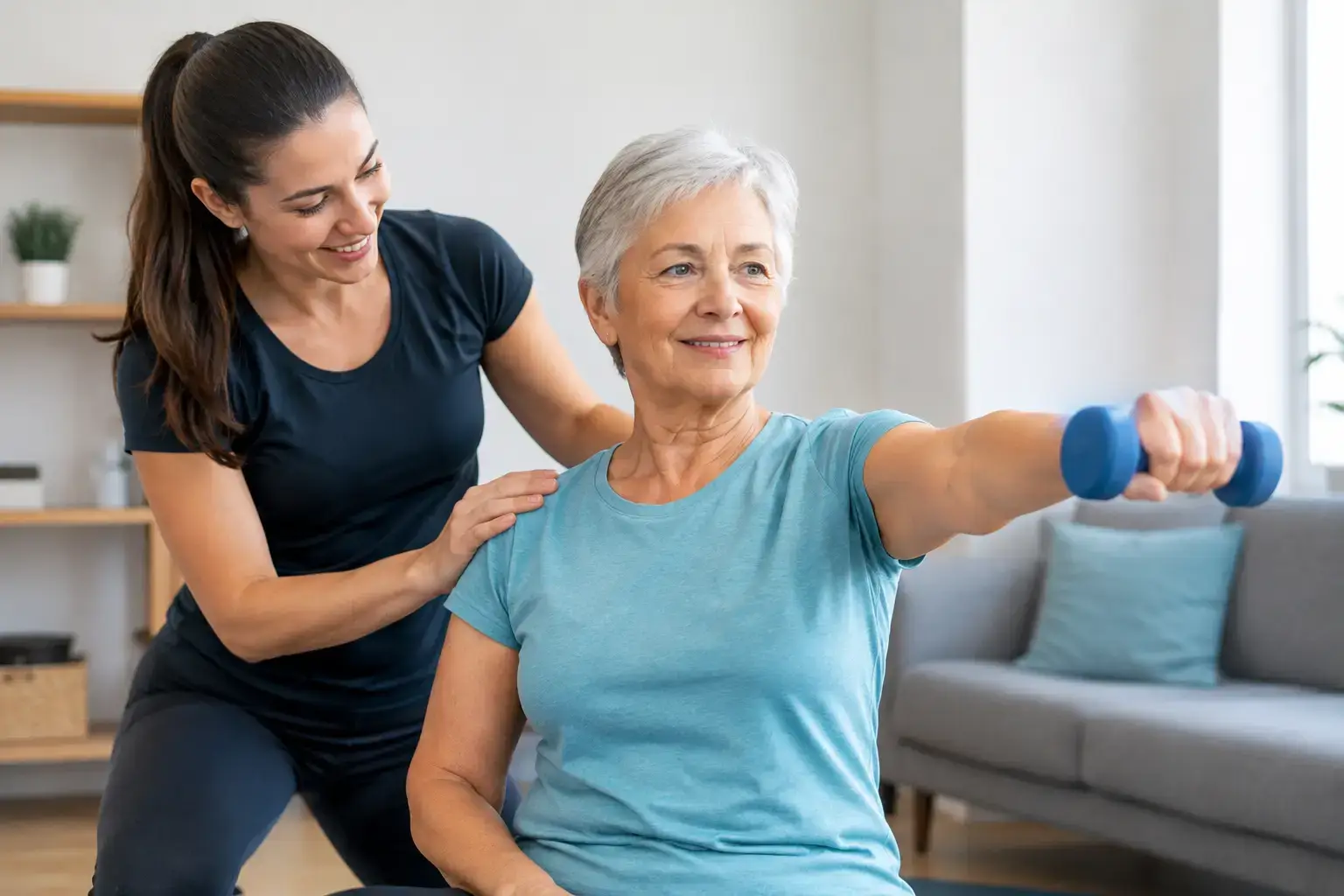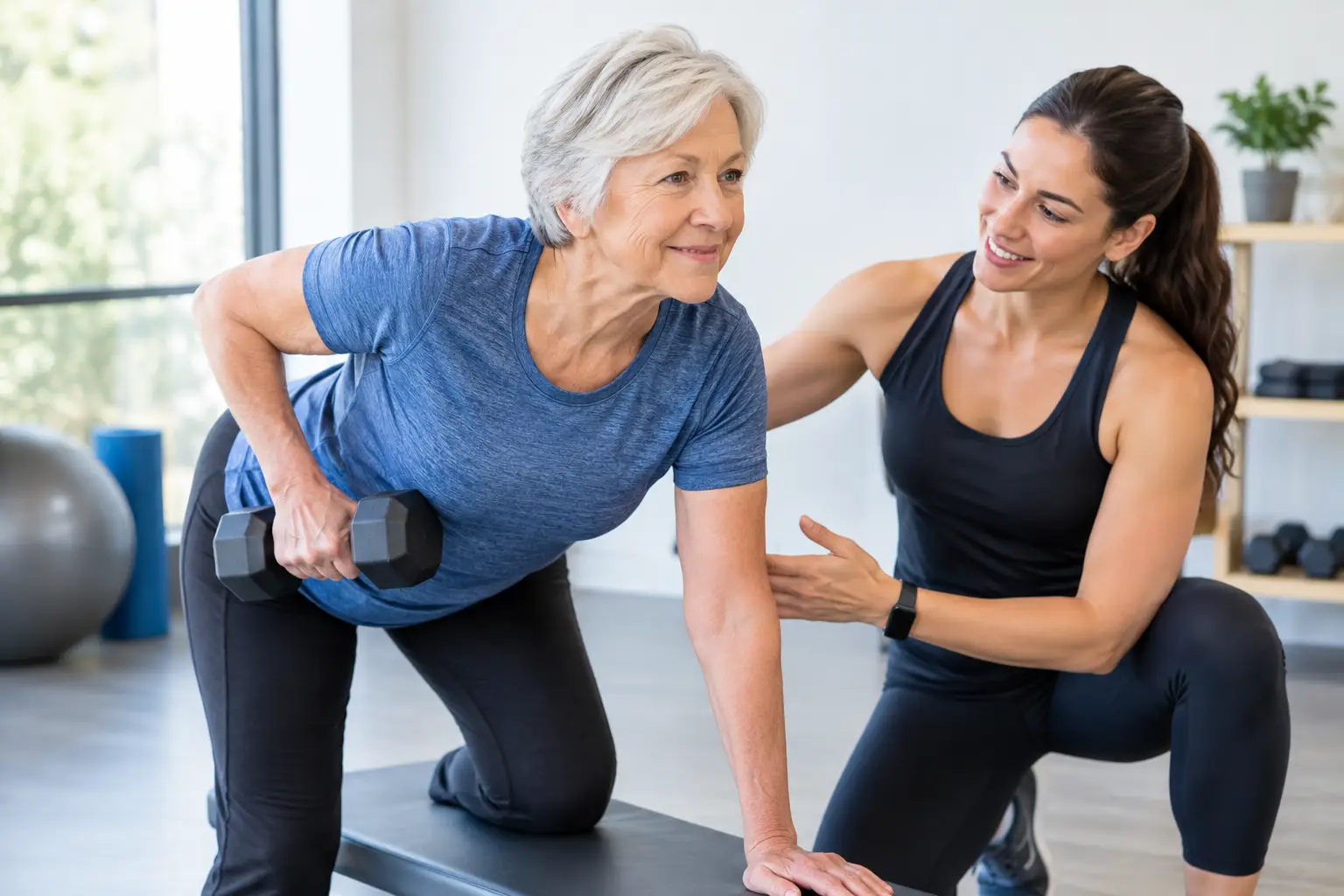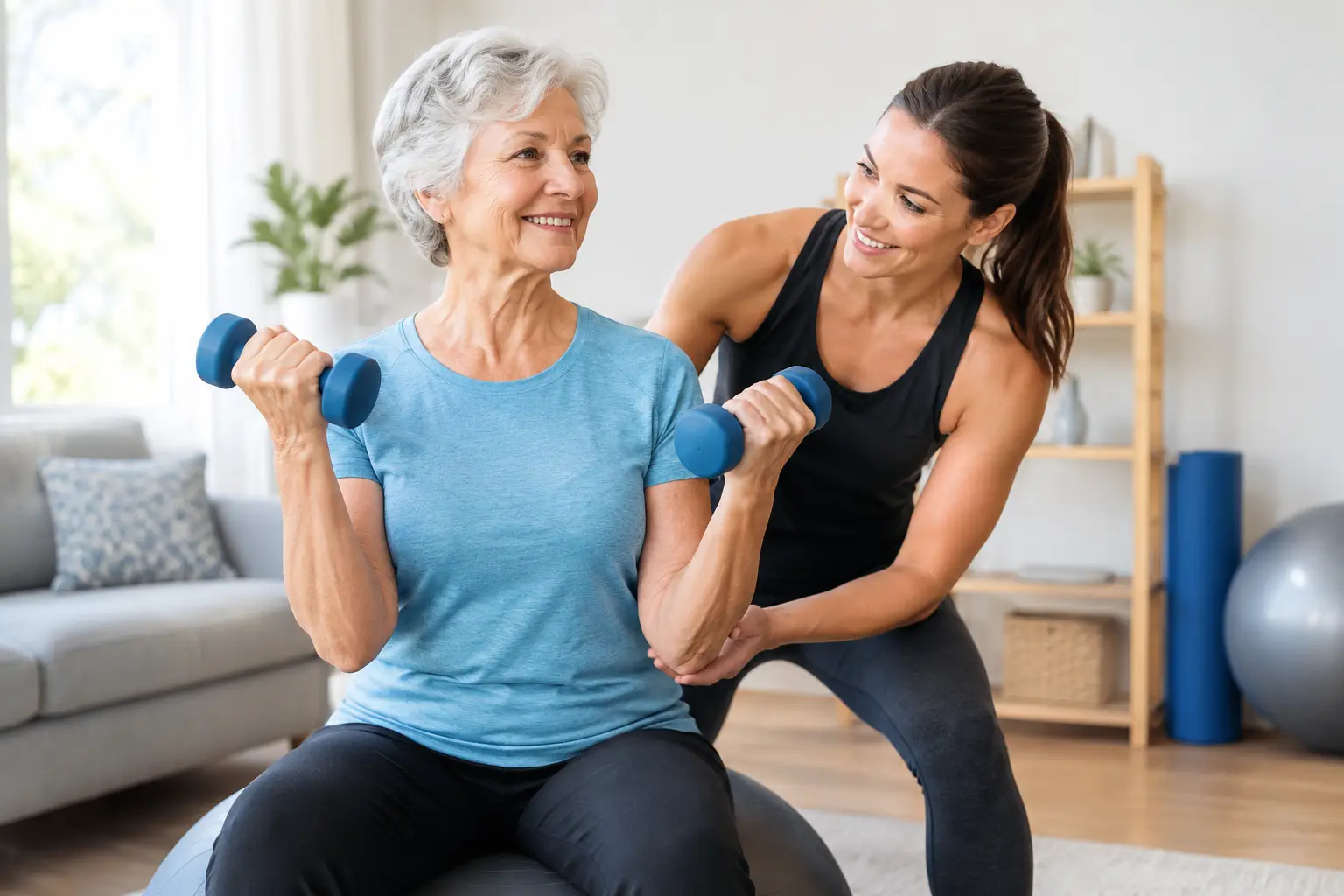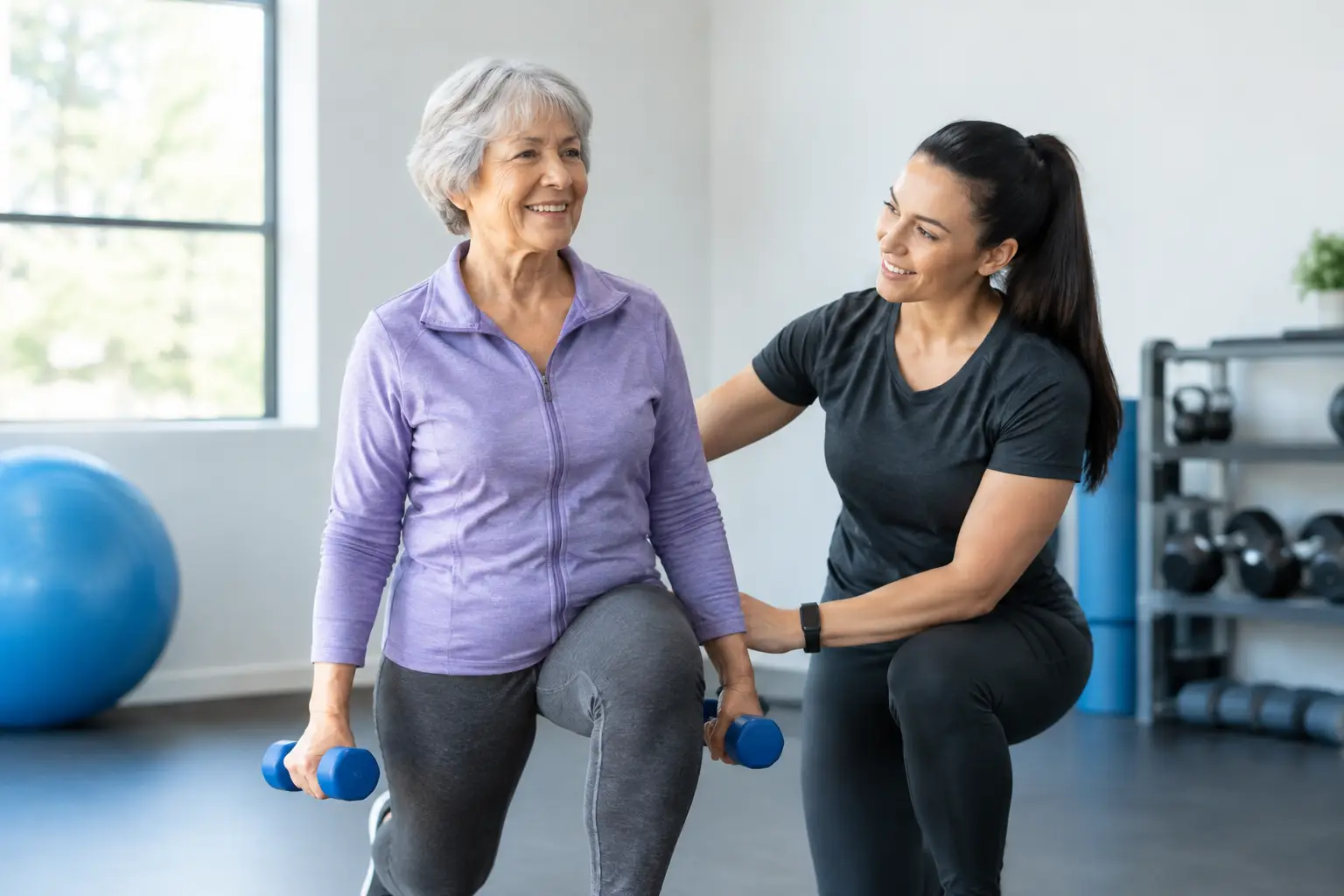

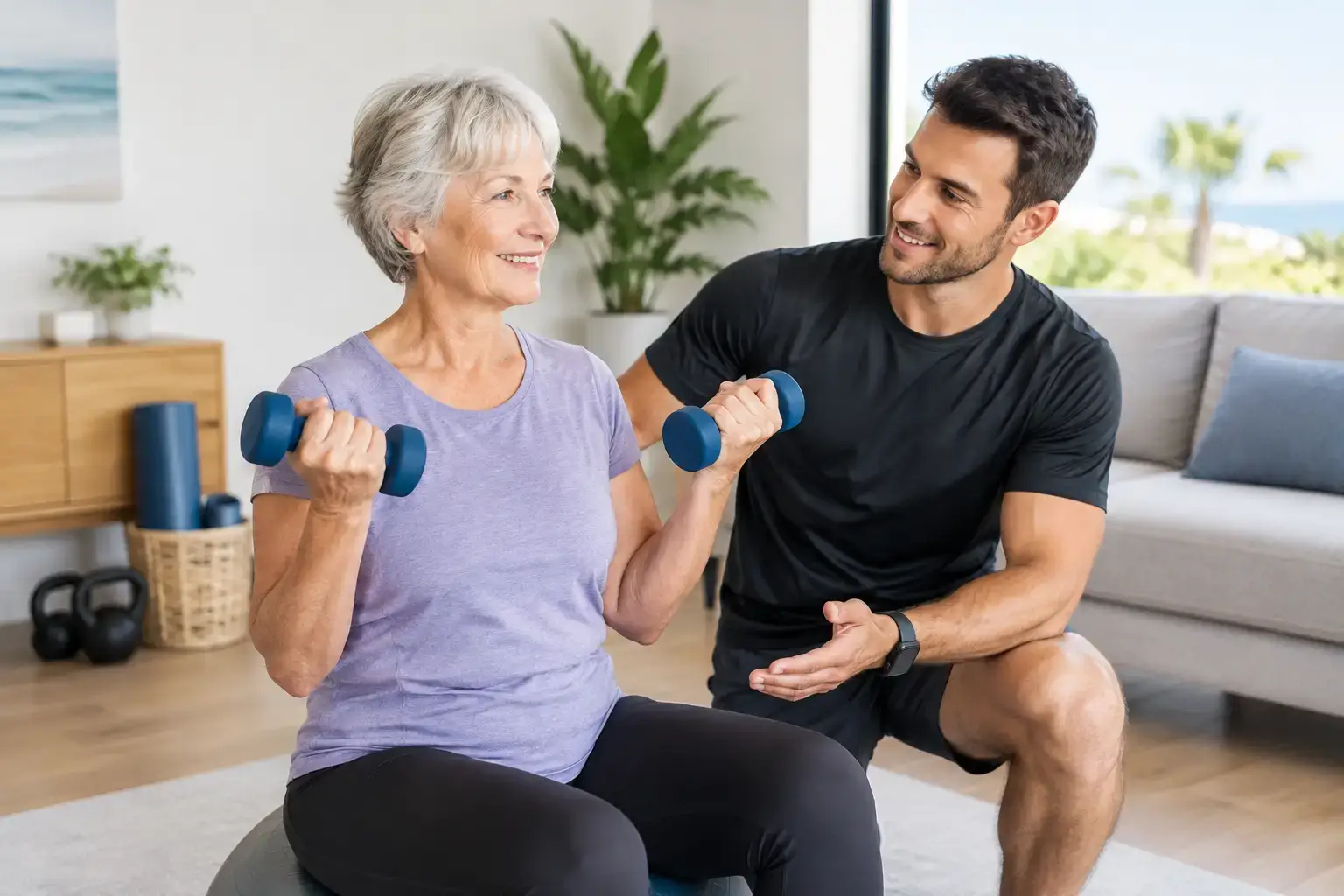
A fall on an uneven sidewalk, a sore knee after pickleball, or a lingering ache after joint replacement can change how you move through the day. An in home trainer in Carlsbad gives you a private, practical way to rebuild strength without driving to a gym, guessing which exercises are safe, or trying to keep up with a class that was not designed for your body.
For adults 55 and older, fitness is rarely about chasing a number on a scale or lifting the heaviest weight in the room. It is about getting up from the floor with confidence, carrying groceries without back pain, traveling comfortably, keeping up with grandchildren, and staying independent in the home you love. The right program meets you where you are, then gives you a clear path forward.
Why an In-Home Trainer in Carlsbad Can Be a Better Fit
A gym can be useful, but it is not always the right environment after an injury, during recovery from surgery, or when balance and joint pain are part of the picture. Parking, crowds, unfamiliar machines, and the pressure to move quickly from one exercise to the next can turn a healthy intention into a reason to skip workouts.
Training at home removes those barriers. Your session happens in a familiar setting, on a schedule that respects your life. There is no commute, no membership contract, and no need to figure out what to do alone between machines. Your trainer brings the appropriate equipment and adjusts each exercise to your current strength, mobility, and comfort level.
That convenience matters, but the bigger benefit is attention. One-on-one training allows every movement to be observed and refined. If your knee shifts inward during a squat, your shoulder feels pinchy during pressing, or you lose balance when stepping backward, those details can be addressed immediately. Small corrections often make the difference between an exercise that feels intimidating and one that helps you feel stronger.
Fitness That Supports Real Life, Not Just Workouts
A personalized program should begin with the question, “What do you want to be able to do more easily?” For one person, the answer may be walking the Carlsbad coast without hip discomfort. For another, it may be climbing stairs, returning to golf, improving pickleball footwork, or feeling steadier while getting out of the shower.
Those goals shape the training plan. Rather than relying on generic routines, an experienced in-home trainer can build strength around functional movements such as standing from a chair, stepping up, reaching, rotating, carrying, and safely getting down to and up from the floor. These are not flashy exercises. They are the movements that protect independence.
Strength training is especially valuable as we age because muscle mass, bone density, reaction time, and balance can all change over time. The answer is not to avoid challenging movement. It is to introduce the right amount of challenge, with solid form and sensible progressions. Light weights, resistance bands, bodyweight work, balance drills, and controlled mobility exercises can be highly effective when they are selected for the individual.
When Pain or Stiffness Has Been Holding You Back
Chronic discomfort can make people understandably cautious. Arthritis, low back stiffness, shoulder irritation, and old injuries often lead to less movement. Then the muscles around the painful area become weaker and tighter, making everyday activities feel even harder.
A thoughtful program does not simply push through pain. It identifies which movements are tolerated, which need modification, and where flexibility, stability, or strength may be missing. Therapeutic exercise, active PNF stretching, and myofascial trigger-point and fascia-release techniques can help reduce guarded movement and improve how the body feels before strength work begins.
There is an important distinction here: exercise should not replace medical care. New, severe, or worsening pain deserves medical evaluation. But once you have clearance to exercise, individualized training can bridge the gap between finishing physical therapy and feeling truly ready for normal life again. Physical therapy may restore basic function. Continued personalized conditioning helps you build the capacity to stay active with confidence.
What a Safe At-Home Session Should Include
Not every personal trainer has experience working with older adults, orthopedic recovery, or chronic joint concerns. When choosing an in-home trainer, look beyond a promise of convenience. Ask how the trainer assesses movement, progresses exercises, and responds when something does not feel right.
A quality session should include four essentials:
- A check-in about pain, energy, sleep, recent activity, and any changes in health or medication.
- Movement coaching that prioritizes alignment, breathing, control, and an appropriate pace over intensity for its own sake.
- Exercises adapted to your home, available space, goals, and current physical ability.
- A progression plan so you can see measurable improvements in strength, balance, mobility, endurance, or daily comfort.
Your plan should not feel static. Some days call for more mobility work, especially after a poor night of sleep or a flare-up in stiffness. Other days may be appropriate for strength progression, more challenging balance drills, or sport-specific conditioning. Good training responds to the person in front of the trainer, not a prewritten calendar.
Balance Training Is About More Than Standing on One Leg
Fall prevention is one of the most valuable reasons to work with a trainer at home. Falls are often treated as random events, but many contributing factors can be improved: leg strength, ankle mobility, posture, reaction time, core control, turning ability, and confidence during uneven or unexpected movement.
Balance training may start with simple weight shifts near a sturdy support. From there, it can progress to controlled step patterns, reaching exercises, directional changes, tandem stance, and movements that mirror the real situations where balance is challenged. The goal is not to make you perform tricks. The goal is to help you recover your footing more effectively and move through daily life with less fear.
Post-Rehab Exercise Without the Guesswork
After a hip, knee, shoulder, or back procedure, many people are relieved to finish formal rehabilitation but uncertain about what comes next. They may have a handout of exercises but no clear plan for rebuilding total-body strength, stamina, and movement confidence. That uncertainty can lead to doing too little or returning to activity too quickly.
Post-rehab training provides a structured middle ground. Exercises can be coordinated with your physician’s or physical therapist’s recommendations while gradually expanding beyond the original area of injury. A recovering knee, for example, benefits from more than knee exercises. Hip strength, ankle mobility, core control, gait mechanics, and overall conditioning all influence how that knee performs.
Progress should be gradual and specific. You may begin with supported chair stands and short walks, then advance toward step-ups, loaded carries, longer periods on your feet, and the movements needed for your preferred activities. The pace depends on the procedure, your history, your current symptoms, and your consistency. Faster is not always better. Steady improvement is better.
Private Training Also Creates Accountability
Even people who know exercise would help them can struggle to make it happen. Home responsibilities, travel, work, fatigue, and the thought of driving across town can quietly push fitness to the bottom of the list. A scheduled trainer brings structure to the week and removes the decision fatigue of planning every workout.
For couples or household members, shared training can be a particularly effective option. You can work toward individual goals in the same session, encourage one another, and make movement part of the rhythm of home life. One person may focus on osteoporosis-safe strength training while another works on weight management or pickleball conditioning. The program can be personal without requiring separate appointments.
Nutrition guidance and realistic at-home activity recommendations can also support your sessions. No extreme rules are needed. Consistent protein intake, hydration, walking, sleep, and simple mobility habits often make training feel better and recovery more predictable. The objective is a routine you can maintain, not a short burst of effort that disappears after a few weeks.
Reclaim Your Strength Where You Live
The best exercise plan is not the most complicated one. It is the one that respects your body, fits your schedule, and helps you do more of what matters to you. Whether you are rebuilding after an injury, managing stiffness, preparing for a more active retirement, or simply tired of feeling unsteady, private training at home can offer a safer and more personal starting point.
Concierge Personal Training brings customized strength, mobility, balance, and post-rehab exercise directly to your home so you can focus on progress, not logistics. Call or text 858-284-8004 for a first FREE session. A stronger next step can begin in the room where you already live your life.