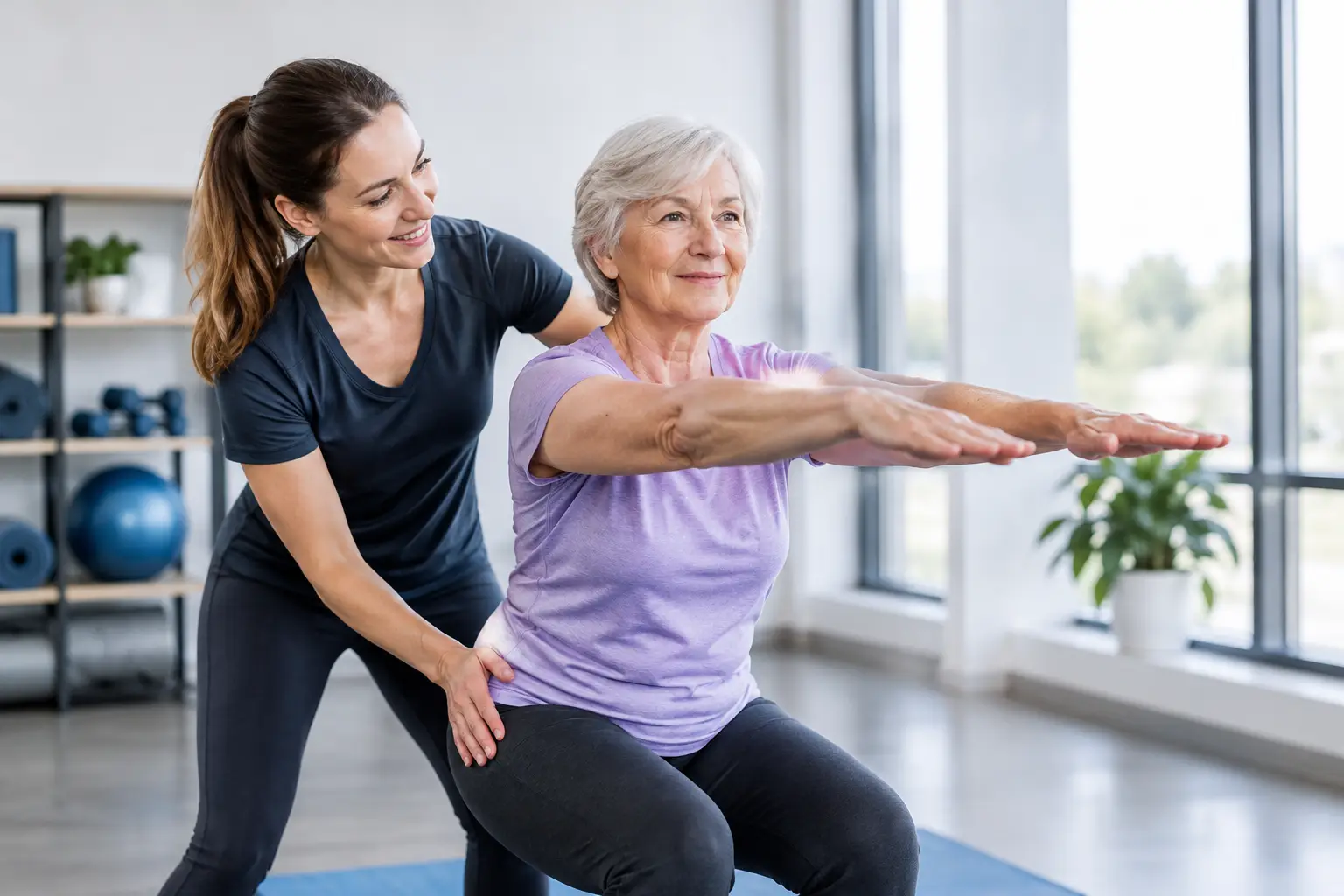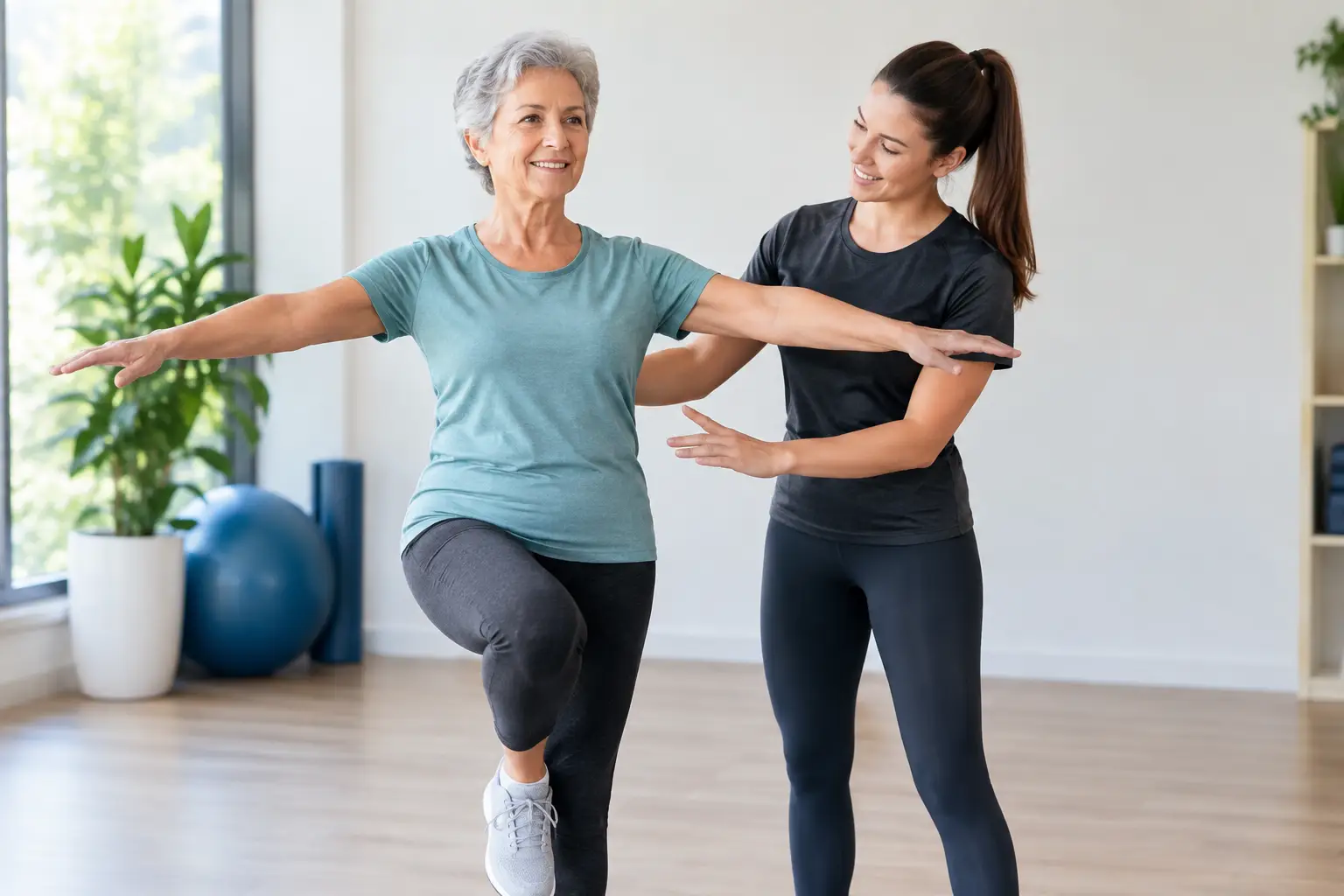

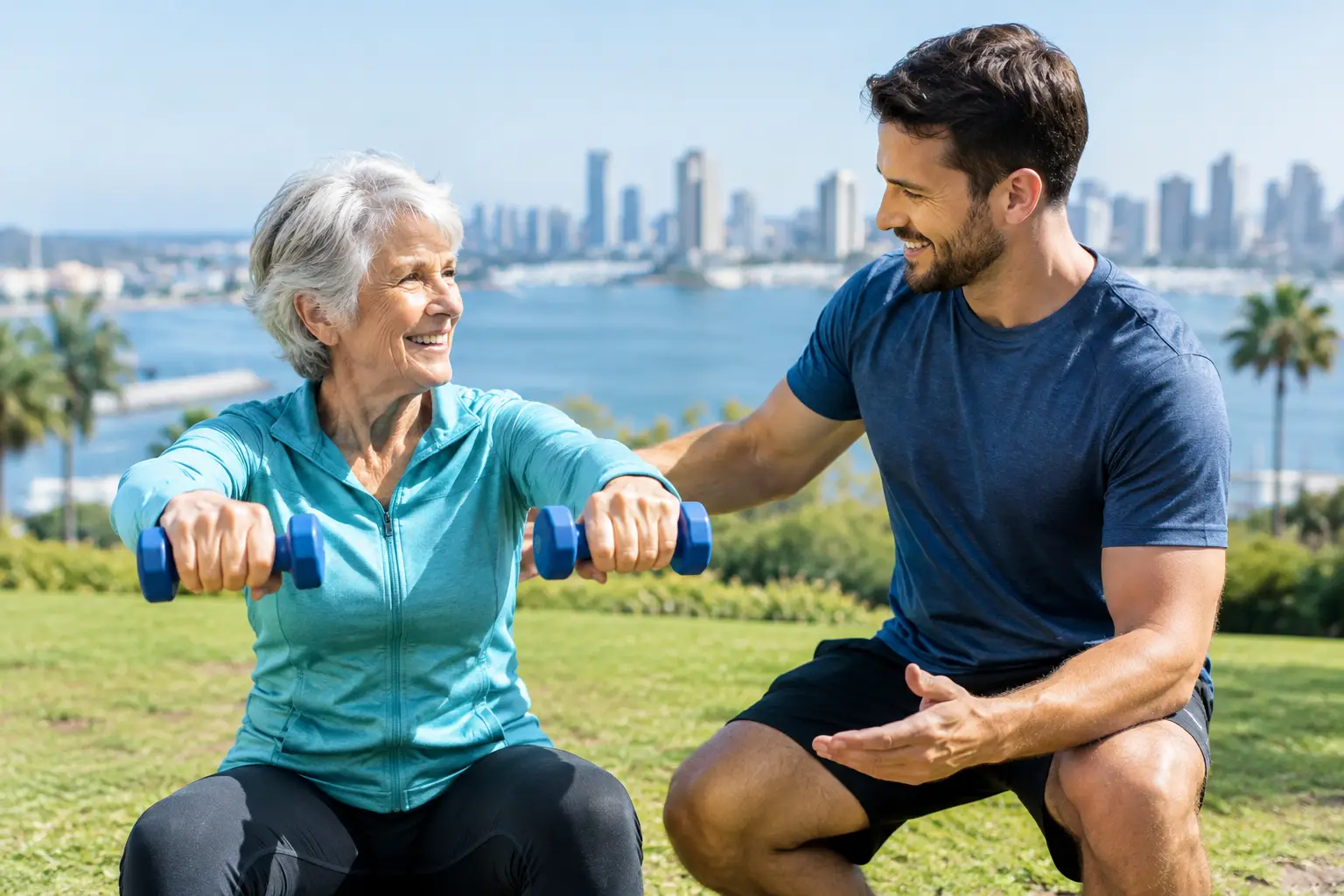
Getting up from a low chair without using your hands. Carrying groceries without shoulder pain. Walking confidently on an uneven trail in Torrey Pines. These are the abilities that make a difference every day, and they are exactly where a senior fitness specialist in San Diego should focus. For adults over 55, fitness is not about chasing a punishing workout. It is about protecting your independence, reducing pain, and having the strength and balance to keep doing what you love.
A general trainer may know how to make a workout challenging. A specialist who understands older adults knows how to make it productive without asking your knees, back, shoulders, or balance to take unnecessary risks. That difference matters whether you are returning to activity after surgery, living with arthritis, concerned about osteoporosis, or simply noticing that stairs and long walks feel harder than they used to.
What a Senior Fitness Specialist Should Address
The right program begins with your real life, not a preset exercise plan. If your goal is to play pickleball twice a week, travel comfortably, get down on the floor with grandchildren, or avoid another fall, your sessions should build toward that goal.
For many adults, the biggest barriers are pain, stiffness, fear of falling, and uncertainty about what is safe. These concerns deserve more than being told to “push through.” A qualified specialist looks at how you move, where you compensate, what activities aggravate symptoms, and which movements can help restore confidence gradually.
That may include focused work for hip stability when stairs feel difficult, ankle and foot strength for safer walking, or upper-body mobility that makes reaching overhead less painful. It can also mean pacing a program carefully after a knee replacement, shoulder procedure, or episode of back pain. Exercise should challenge you, but it should not leave you guessing whether you have done damage.
Strength for Everyday Life
Muscle strength supports far more than appearance. It helps you rise from a chair, catch yourself if you lose balance, lift a suitcase, climb steps, and maintain good posture as fatigue sets in. Strength training is also a key part of maintaining bone health, particularly for adults with osteopenia or osteoporosis concerns.
The best strength plan is not automatically the heaviest one. Some clients benefit from controlled bodyweight movements, resistance bands, light dumbbells, or supported balance work. Others are ready for more progressive loading. The appropriate level depends on your health history, joint tolerance, movement quality, and goals.
A thoughtful trainer also understands that strength is built over time. Consistency beats occasional all-out effort. Small, well-chosen progressions can create meaningful changes in confidence and function without turning every session into a recovery problem.
Balance Is a Skill You Can Practice
Falls can change a person’s life quickly, but fear of falling can be limiting long before a fall occurs. Many people start avoiding stairs, curbs, uneven sidewalks, group activities, or walks after dark because they do not trust their footing. Avoidance often leads to less movement, which can further weaken the very systems that help prevent falls.
Balance training is more than standing on one leg near a countertop. Effective work may involve improving hip strength, ankle mobility, posture, reaction time, walking mechanics, and the ability to turn or step around obstacles. It should be scaled to your current ability and performed in a setting where you feel secure.
For some clients, this begins with supported exercises and steady, simple patterns. For others, it may include controlled stepping, direction changes, or sport-specific movement for golf and pickleball. The goal is not to make a workout look impressive. The goal is to make daily movement feel safer.
Why In-Home Training Makes a Difference
A gym can be useful, but it is not always the best setting for adults who are managing pain, recovering from an injury, or short on time. Getting dressed, driving across town, parking, navigating equipment, and working out in a crowded room can become enough friction to skip the session altogether.
In-home training removes that barrier. Your specialist can see the environment where you actually live: the stairs you use, the chair you struggle to rise from, the space where you want to exercise, and the routines that make consistency realistic. Training in a familiar setting can also reduce the intimidation many people feel around conventional gym culture.
Concierge Personal Training brings the necessary equipment to clients throughout Greater San Diego, so sessions can be built around your needs rather than around what happens to be available in a busy fitness center. This is especially helpful for people who value privacy, flexible scheduling, and one-on-one attention.
For couples or members of the same household, shared training can be an excellent option. You may have different exercise needs, yet still benefit from the accountability of showing up together. One person may be working on post-rehabilitation strength while the other is focused on balance, weight management, or mobility. A skilled trainer can adjust each program without making either person feel left behind.
The Gap Between Physical Therapy and Regular Training
Physical therapy is essential after an injury or procedure, but many people reach the end of their prescribed visits before they feel fully ready to return to normal activity. They may have less pain and better range of motion, yet still lack the strength, balance, or confidence to garden, travel, play sports, or maintain an active lifestyle independently.
This is where specialized post-rehabilitation fitness can be valuable. It is not a replacement for medical care or physical therapy. Instead, it can provide a responsible next step once your medical team has cleared you for exercise. The focus shifts from healing an acute problem to rebuilding durable movement capacity.
Depending on your needs, sessions may include therapeutic exercise, active stretching, myofascial trigger-point techniques, fascia-release work, and progressive strength conditioning. These methods should have a clear purpose. Releasing a tight area may help you move more comfortably, but lasting improvement usually requires teaching the surrounding muscles and joints to support better movement afterward.
A good specialist will also ask about your physician or therapist recommendations, medications that affect balance or blood pressure, and any restrictions related to joint replacements, osteoporosis, cardiovascular conditions, or previous injuries. That conversation is not excessive caution. It is the foundation for a program that respects your body.
Questions to Ask Before You Choose
Credentials matter, but they are only part of the picture. Before hiring a senior fitness specialist, ask how they assess new clients and how they modify exercises for arthritis, joint replacements, osteoporosis, and balance limitations. Ask how they communicate around pain. A useful answer should not be “no pain, no gain.” It should explain how they distinguish normal effort from warning signs that call for a change.
You should also understand what happens between sessions. Progress often comes from a combination of guided training, simple home exercises, walking or activity goals, recovery habits, and nutrition support when appropriate. The plan should be clear enough that you know what to do, but manageable enough that it fits your life.
Look for someone who tracks changes that matter to you. That might be needing fewer breaks on a walk, improving your ability to get up from the floor, feeling steadier while carrying laundry, or returning to a favorite recreational activity. The scale can be one measure for some people, but it is rarely the whole story.
Finally, pay attention to how you feel during the consultation. You should feel heard, not judged or pressured. The right trainer will meet you at your current level, explain the reasoning behind the plan, and encourage progress without minimizing your concerns.
Build Confidence One Session at a Time
There is no prize for waiting until pain, weakness, or fear has taken away more of your freedom. Whether you want to feel steadier on your feet, regain strength after an orthopedic procedure, or have more energy for the people and places you enjoy, a personalized plan can give you a practical place to start.
Begin with an honest conversation about what you miss doing and what you want to protect. With the right support, each safe repetition can become evidence that your body is still capable of getting stronger, moving better, and carrying you into the next chapter with confidence.