
A diagnosis of osteoporosis can make ordinary movement feel uncertain. You may wonder whether lifting a grocery bag, reaching overhead, playing pickleball, or getting down to the floor is now too risky. The right osteoporosis exercise program for seniors does not ask you to stop moving. It helps you move with better strength, balance, posture, and confidence while respecting your medical history and current ability.
Exercise cannot replace medical care or reverse every change in bone density. It can, however, help protect the independence that matters most: walking comfortably, climbing stairs, traveling, carrying laundry, and recovering your balance when you trip. The key is choosing the right type of movement and avoiding exercises that place unnecessary stress on vulnerable areas of the spine.
Why Exercise Matters When You Have Osteoporosis
Bone is living tissue that responds to the forces placed on it. Safe weight-bearing activity and resistance training can encourage bone maintenance while strengthening the muscles that support your hips, knees, spine, and shoulders. For many adults over 55, the immediate benefits are just as meaningful as the long-term ones: less stiffness, steadier walking, easier transfers in and out of a chair, and more confidence doing daily tasks.
A well-designed program also targets fall prevention. Most fractures associated with osteoporosis happen after a fall, so stronger legs alone are not enough. You need balance training, posture work, ankle mobility, safe reaction drills, and practical strategies for navigating curbs, uneven sidewalks, pets, and clutter at home.
The right plan depends on your bone-density results, history of fractures, joint pain, surgical history, medications, and comfort with exercise. Someone with mild osteopenia who is already active may need a very different plan from someone with spinal compression fractures, severe arthritis, or recent hip replacement.
The Building Blocks of an Osteoporosis Exercise Program for Seniors
An effective program usually includes four connected areas: weight-bearing movement, strength training, balance practice, and posture-focused mobility. Each piece has a purpose, and none needs to involve punishing workouts or crowded gyms.
Weight-Bearing Movement That Fits Your Body
Weight-bearing means your bones and muscles support your body against gravity. Walking is often an excellent starting point, especially when it is done consistently and at a pace that feels purposeful. Depending on your fitness level and your physician’s guidance, stair climbing, gentle hiking, dancing, or low-impact aerobics may also fit.
Swimming and cycling are excellent for cardiovascular health and joint comfort, but they do not create the same bone-loading benefit because your body weight is supported. They can still be part of a balanced routine, particularly for people with painful knees or hips. Think of them as valuable additions, not the entire plan.
If you have been sedentary or are recovering from pain, start with short, repeatable walks rather than pushing for a large step count immediately. Ten minutes after breakfast and ten minutes after dinner can be more sustainable than one long outing that leaves you sore or fatigued.
Strength Training for Hips, Legs, Back, and Arms
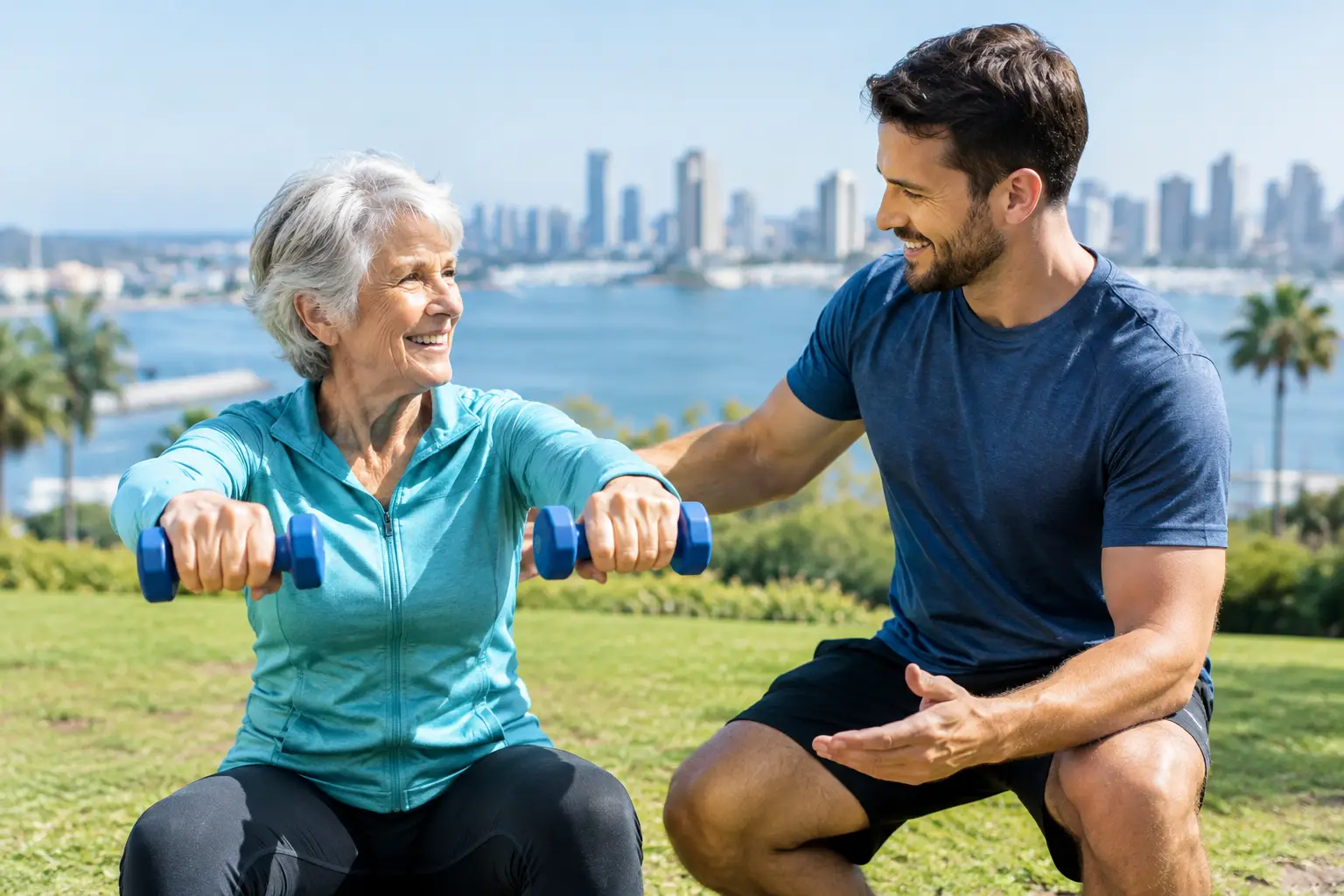
Strength training is one of the most valuable tools for maintaining function with osteoporosis. Strong muscles improve your ability to absorb force, control your body, and perform the tasks that often become difficult with age. Properly coached resistance work may use dumbbells, resistance bands, body weight, a sturdy chair, or portable equipment brought into your home.
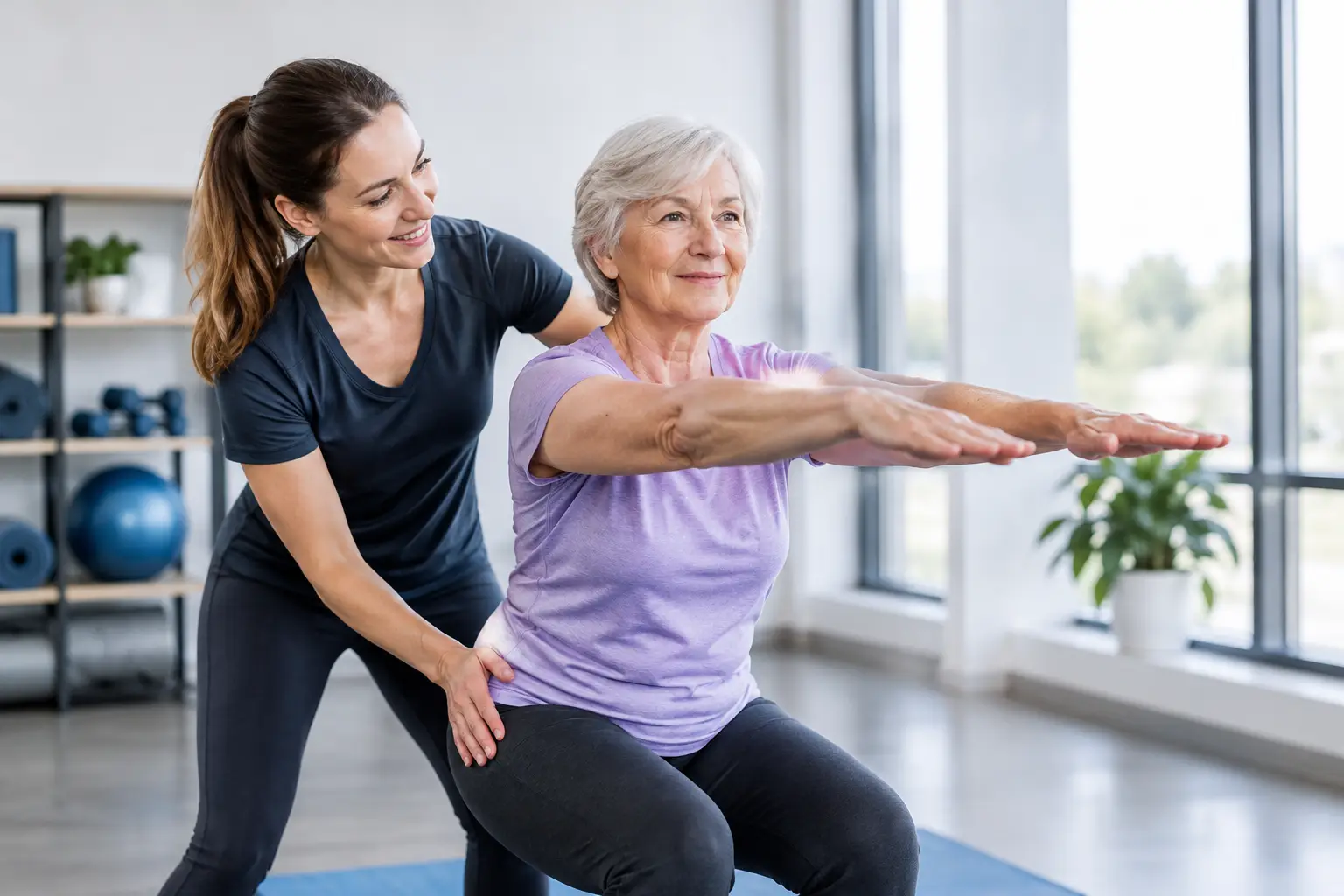
Useful patterns often include sit-to-stands from a chair, supported squats, step-ups, heel raises, rows, wall or countertop push-ups, and controlled overhead work when appropriate. Hip-strengthening exercises matter because the hips are a common fracture site and because stronger hip muscles help stabilize your gait.
The goal is not simply to make an exercise feel hard. It is to use good alignment, breathe normally, progress gradually, and select resistance that challenges your muscles without aggravating joints or compromising form. A few thoughtful sessions each week can be more productive than random daily workouts.
Balance Training That Carries Into Daily Life
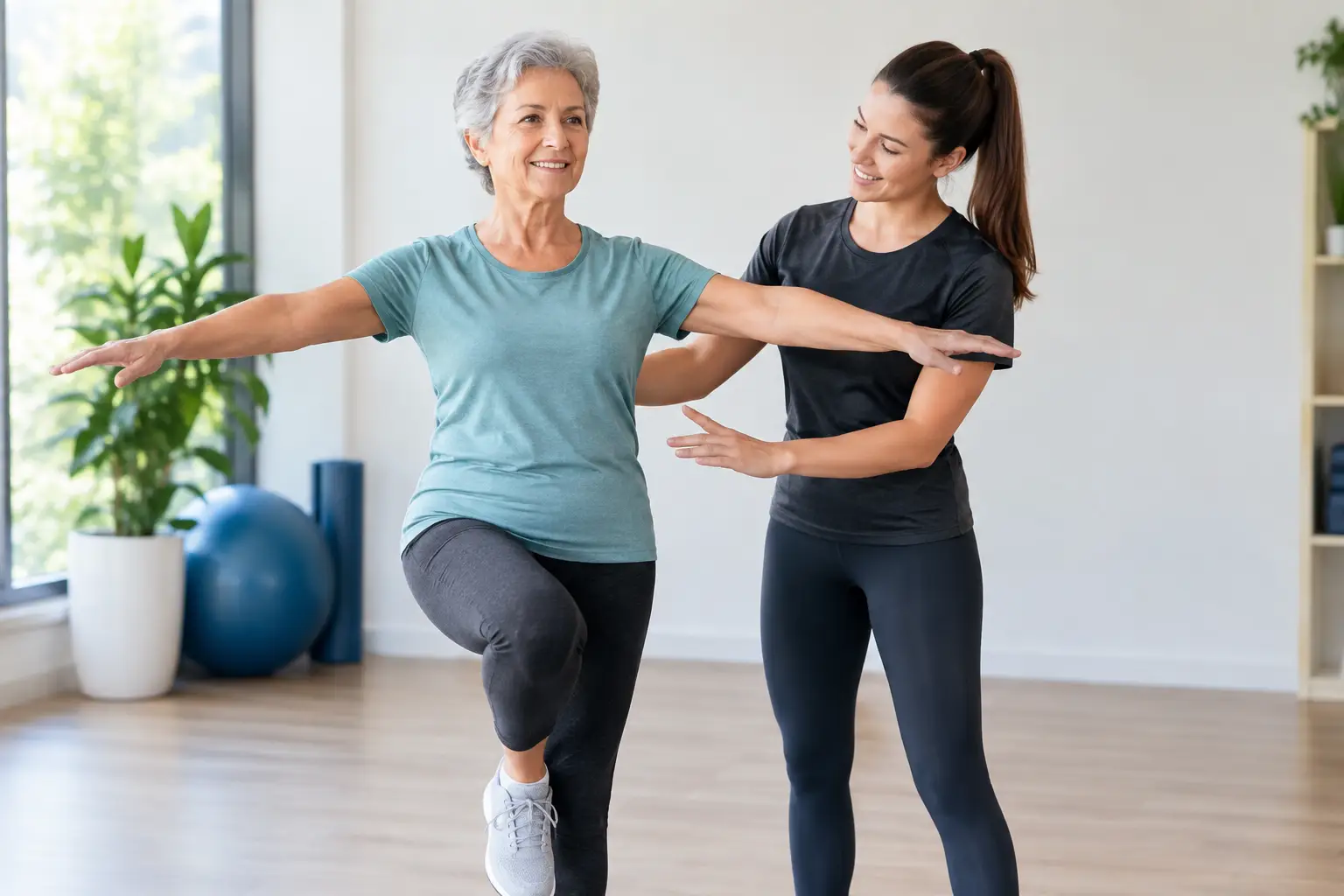
Balance is a skill, and it improves when you practice it safely. Standing near a countertop while shifting weight from one foot to the other, practicing tandem stance, stepping in different directions, and performing controlled single-leg balance with support nearby can improve stability over time.
Balance work should be specific enough to prepare you for real life. That can mean turning your head while walking, stepping over a low object, rising from a chair without using your hands, or learning to recover your posture after a small loss of balance. These drills should be carefully modified for anyone who feels unsteady, has neuropathy, or takes medications that cause dizziness.
Posture and Mobility Without Risky Stretching
Osteoporosis can contribute to a rounded upper-back posture, which may make breathing, reaching, and walking mechanics more difficult. Gentle upper-back strengthening, shoulder mobility, chest opening, and hip flexibility can support a taller, more comfortable posture.
Not every stretch is a good choice. Deep forward bending, forceful twisting, and aggressive abdominal exercises that repeatedly curl the spine can raise fracture risk for some people, particularly those with osteoporosis in the spine or a history of compression fractures. Toe touches, full sit-ups, and twisting stretches may need to be replaced with safer alternatives.
A qualified professional can show you how to hinge at your hips, use your legs to reach low objects, and get out of bed with a log-roll technique. These may sound like small details, but they are practical skills that can protect your spine every day.
How Often Should You Exercise?
Consistency beats intensity. Many seniors do well with weight-bearing activity most days, strength training two to three nonconsecutive days per week, and brief balance practice several days per week. Mobility and posture exercises can often be included in a short daily routine, as long as they are comfortable and appropriate for your condition.
Your starting point matters. If you are managing pain, fatigue, or a recent procedure, your initial program may be shorter and more focused on movement quality. As strength and confidence improve, resistance, walking time, and balance challenge can progress. Mild muscle fatigue is normal. Sharp pain, new back pain, chest pain, dizziness, or pain that worsens after exercise is a reason to stop and contact a healthcare professional.
When Personalized Guidance Is Worth It
Generic online workouts rarely account for a previous fracture, a spinal curvature, a painful knee, or the anxiety that can follow a fall. They also cannot see whether you are holding your breath during a lift, bending from your back instead of your hips, or compensating around an old injury.
Personalized in-home training creates a more practical path forward. Your trainer can assess how you stand, walk, sit, reach, and move through your actual home environment. They can adjust the height of a chair, use the countertop for support, bring appropriate equipment, and build a routine around the activities you want to keep doing.
At Concierge Personal Training, we bridge the gap between rehabilitation and traditional exercise with individualized strength conditioning, active stretching, balance work, and therapeutic movement. For adults in Greater San Diego who want private guidance without the stress of a gym, that support can make the difference between avoiding movement and reclaiming your strength.
A Safer Way to Begin This Week
Before beginning a new routine, discuss your diagnosis and any fracture history with your physician. Ask whether there are restrictions related to spinal flexion, twisting, impact, or lifting. Then begin with a simple foundation: regular walking within your tolerance, supported chair stands, posture practice, and brief balance exercises performed near a stable surface.
Do not wait for a perfect time, a perfect fitness level, or complete confidence. Confidence is often built through small, successful repetitions. Call or text 858-284-8004 for a first FREE session, and get a plan that helps you move more safely, feel stronger at home, and keep saying yes to the life you enjoy.