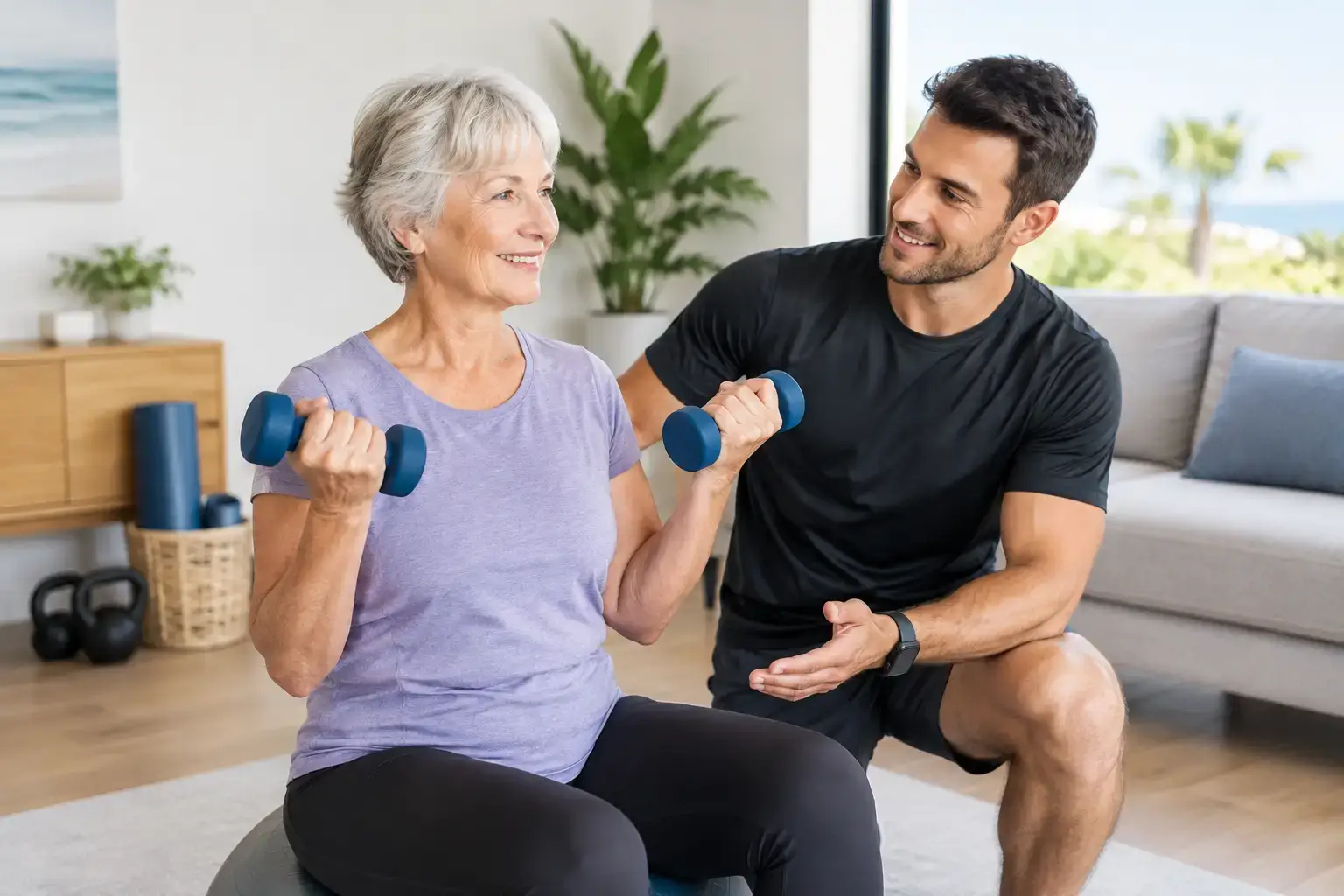

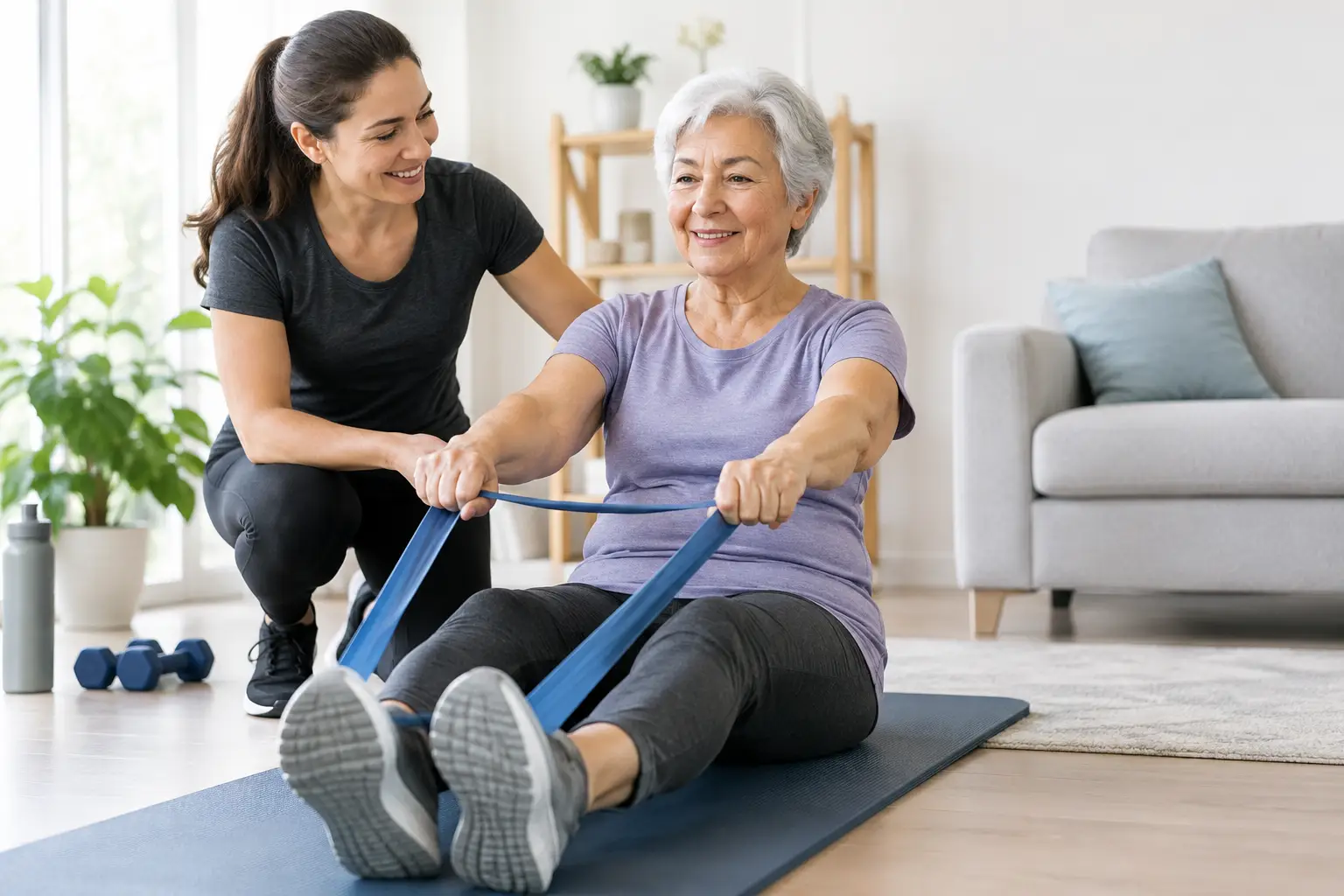
Getting down to the floor, standing up from a favorite chair, opening a jar, or walking through the grocery store should not require a recovery day. Yet arthritis can make ordinary movements feel uncertain, especially when stiffness, swelling, or a recent flare changes from one morning to the next. In-home arthritis exercise training offers a practical way to rebuild strength and mobility without navigating a crowded gym or following a one-size-fits-all routine.
The goal is not to push through joint pain. It is to help your body move more comfortably, support the muscles around vulnerable joints, and make daily life feel more manageable. For adults over 55, the right program can mean greater confidence on stairs, steadier walking, easier travel, and more freedom to keep doing the activities that matter.
Why arthritis needs a personalized exercise plan
Arthritis is not one experience. Osteoarthritis in the knees calls for different movement choices than arthritis affecting the hands, hips, shoulders, spine, or feet. Some people feel stiff after sitting. Others feel worse after too much standing, climbing, or repetitive activity. A program that works beautifully for a neighbor may aggravate your symptoms.
That is why generic online workouts and high-energy group classes can be a poor fit. The exercise itself may not be bad, but the starting position, range of motion, resistance, pace, and recovery time all matter. Someone with knee arthritis may benefit from supported sit-to-stands and gentle hip strengthening, while deep lunges or quick direction changes may be too much on a particular day.
A knowledgeable trainer begins by watching how you move in your own environment. Is your couch too low for a comfortable stand? Do you hold the railing tightly on stairs? Does your shoulder pinch when reaching into a cabinet? These everyday details help shape a plan that is functional, not just theoretical.
What in-home arthritis exercise training should include
A safe program should feel purposeful, not punishing. At Concierge Personal Training, sessions are tailored around your current pain level, medical history, goals, and the movements that are most difficult at home. Equipment is brought to you, so there is no need to purchase machines or figure out a gym floor on your own.
Mobility without forcing the joint
Arthritic joints often respond well to regular, controlled movement. Gentle mobility work can help reduce the feeling of being “rusty” after sleep or long periods of sitting. This may include comfortable joint circles, supported range-of-motion drills, active stretching, and breathing that helps reduce unnecessary muscle guarding.
The key is not stretching farther at all costs. A useful mobility exercise creates a mild pulling or working sensation, not sharp pain, catching, or a lingering increase in symptoms. On days when a joint is more irritated, a smaller range and slower pace may be the smartest choice.
Strength where it protects you most
Strong muscles reduce the workload on stressed joints. For knee arthritis, strengthening the glutes, quadriceps, hamstrings, calves, and core can improve how you rise, walk, and manage stairs. For shoulder arthritis, work may focus on posture, shoulder-blade control, the rotator cuff, and pain-free pressing or pulling patterns.
This does not always mean lifting heavy weights. Bands, light dumbbells, bodyweight, a stable chair, and carefully selected balance tools can provide plenty of challenge. As comfort and control improve, resistance can increase gradually. The aim is measurable progress without the boom-and-bust cycle of doing too much on a good day and paying for it afterward.
Balance and fall-prevention practice
Arthritis pain can subtly change the way you walk. You may favor one leg, shorten your stride, avoid turning quickly, or become less confident on uneven ground. Over time, that hesitation can increase fall risk.
Balance training is especially valuable because it connects strength to real life. Supported single-leg work, weight shifts, controlled stepping, turning practice, and getting up and down from a chair can improve stability in ways that matter when you are carrying laundry, stepping off a curb, or playing with grandchildren. Every drill should be adjusted to your current level, with stable support nearby when needed.
Hands-on recovery and flexibility work
Stiffness is not always coming from the joint alone. Tight surrounding muscles and fascia can limit motion and make a joint feel more restricted. Appropriate myofascial trigger-point and fascia-release techniques, along with active PNF stretching, may help improve movement quality when incorporated thoughtfully into a training session.
These techniques are not a substitute for medical care, and they should never be painful. They are tools that can complement therapeutic exercise, particularly for people who feel caught between finishing physical therapy and being ready for ordinary personal training.
How to exercise during an arthritis flare
One of the hardest parts of arthritis is uncertainty. You may wake up feeling ready to move, then discover a joint is swollen, warm, or much more painful than usual. Skipping all activity for several days can make stiffness worse, but forcing a normal workout through a flare can prolong the problem.
Think of your plan as adjustable. During a mild flare, reduce resistance, shorten the session, choose supported exercises, and emphasize gentle range of motion. A short walk on level ground or a few rounds of easy sit-to-stands may be enough. If pain becomes sharp, the joint feels unstable, swelling is significant, or symptoms are worsening rather than settling, stop and consult your physician or physical therapist.
A simple guideline is to pay attention to your response later that day and the next morning. Some muscle fatigue is normal when building strength. Increased joint pain that lasts more than a day or two suggests the session was too demanding and should be modified.
The advantages of training at home
Consistency is often the difference between knowing what to do and actually feeling better. Training at home removes several obstacles at once: driving, parking, gym crowds, intimidating equipment, and the temptation to cancel because leaving the house feels like too much effort.
Your home also provides the best setting for practical coaching. A trainer can help you practice the movements you use every day, from safely getting out of a low chair to setting up a comfortable walking routine. For a couple managing different needs, shared household training can create helpful accountability while each person follows an individualized program.
For clients in Greater San Diego, this convenience is especially valuable when joint discomfort, busy schedules, or post-rehabilitation restrictions make a traditional gym unrealistic. The session comes to you, along with the equipment, structure, and personal attention needed to progress safely.
Small habits that support your training
Exercise works best when it is part of a larger routine that respects your joints. Regular movement breaks can prevent long periods of stiffness. Supportive shoes, sensible pacing during errands, adequate hydration, and sleep all influence how you feel during training. Nutrition also matters, particularly if weight management is a goal, because even modest weight loss can reduce stress on weight-bearing joints.
You do not need perfection. A sustainable routine may begin with two guided sessions per week and a few short, comfortable movements between appointments. The right starting point depends on your current symptoms, confidence, and other health conditions.
Reclaim confidence in your movement
Arthritis may require more planning, but it does not have to dictate every decision you make. With attentive coaching, carefully progressed strength work, and exercises that fit your actual life, many people find they can move with less fear and more control.
Call or text 858-284-8004 for a first FREE session. You can discuss what hurts, what you want to get back to, and what a safe in-home plan could look like.
The next meaningful improvement may be simple: standing from your chair more easily, taking a longer walk, or waking up with less stiffness. Those wins build on each other, one well-chosen movement at a time.